
To all my Jewish friends around the world, a blessed Rosh Hashanah and a wonderful new year!


To all my Jewish friends around the world, a blessed Rosh Hashanah and a wonderful new year!
To all my Jewish friends around the world, a blessed Rosh Hashanah and a wonderful new year!
To all my Jewish friends around the world, a blessed Rosh Hashanah and a wonderful new year!
Filed under Caregiving, The Purple Jacket
I have always had a special place in my heart for Hospice.
By Terre Mirsch
I stumbled upon another blog this weekend- one that immediately caught my interest because it is written by a hospice patient. In Til we meet again, Wanda shares her journey through hospice, checking off items from her bucket list and learning to live each day to its fullest. I found her spirit and willingness to openly share her journey with others inspiring; her zest for living is a force to be emulated by all of us. As I read through Wanda’s blog posts, where she discussed a variety of experiences and emotions, I was not surprised when she posed the question, “Is death the only way out of hospice?”
View original post 644 more words
Filed under Caregiving, The Purple Jacket
Great Tips on how to say Healthy as a Senior
Filed under Caregiving, The Purple Jacket
Purple Jacket Readers Note: This is a formal academic essay submitted on ‘The Purple Jacket’ by…
Chris MacLellan, September 8, 2012, Short Essay #1: Vote Yes for Online Communities, COML 509 Professor Alexander Kuskis, Gonzaga University

Photo Credit: Pinterest
Communication takes place in a myriad of ways and modern technology has certainly changed the way society interacts. What would communication be to a deaf person without the ability to read lips or understand sign language? Smoke singles for the Indians; Morris Code? There is an endless list of communication models, yet the common denominator in all models of communication is some form of human interaction. Modern technology has made the world smaller, creating numerous opportunities for people to come together share resources, while forming international support for any one particular cause. This essay will demonstrate the importance of online communities and their positive effects on sub-groups within society.
Anyone who has been a caregiver knows that outside support is an important part of the Caregiving process. Support can come in many different forms: emotional, physical, and financial just to name a few. To be a healthy caregiver, outside support is essential to the physical and mental well-being of all parties involved in the Caregiving experience. According to the National Family Caregiving Association, “More than 65 million people, 29% of the U.S. population, provide care for a chronically ill, disabled or aged family member or friend during any given year and spend an average of 20 hours per week providing care for their loved one.” (National Family Caregiving Alliance, 2009) Many of those 65 million people hold down full-time jobs; Working caregivers often sacrifice leisure time, while suffering stress-related illnesses. Caregivers multi-task, are pressed for time, and always searching for that proper balance in life. One way that family caregivers find care, comfort, and support is through online communities.

Photo Credit: Caregiving.com
On-line communities are essential for caregivers. Caregivers use online communities to navigate the home health system, not only for their loved one’s physical and emotional needs, but for their personal support system as well. Denise Brown who leads one of the most popular online Caregiving communities, Caregiving.com said, “Online communities are open 24/7–you can connect when it’s convenient for you. You also can control the type of support you receive–chats, online support groups, blogging, simply reading and lurking. Online communities offer so many options for how and when you connect. They are a great reminder that you aren’t alone, that others understand and know what it’s like.” (Brown, 2012)
Online communities can be as diverse as your neighborhoods. The same can be said for the online community at Caregiving.com. This form of Computer Mediated Communication (CMC) offers a variety of subgroups within the Caregiving genre as Caregiving comes in many different forms. (I.e. Caring for parents, caring for a spouse, caring for a partner, caring for children, caring for sibling) “According to social network scholars, CMC is more than capable of supporting strong, multiple ties between people.” (Thurlow, Lengel & Tomic, 2004) This is where Caregiving.com is at its best. Caregivers are so focused on taking care of others; caregivers often lose sight of self. The Caregiving.com community provides an immediate outlet for all caregivers to help escape loneliness,share resources while collaborating on issues that caregivers face on a daily basis. “For the family members of older people, online social networks can provide a bit of relief.” (Clifford, 2009) Simply put, on-line communities provide the assurance of knowing that you are not alone.

Photo Credit: Pinterest
The very nature of Caregiving implies that someone is the recipient of care. However, how do you describe the person you care for? In 2009, this topic came up for discussion on Caregiving.com as the common description used for those receiving care was ‘care recipient’. One of the members pointed out that the label ‘care recipient’ did not accurately reflect her Caregiving role with her mother. Like any other community who constructively deals with an issue it faces, the community at Caregiving.com collaborated on what the proper term to use for those for whom are cared. “Successful communities evolve to keep pace with the changing needs of members and owners.” (Kim, 2000) Through discussion and subsequent polling of the online community, the term (and new word) ‘caree’ was developed and instituted on Caregiving.com. This type of collaboration creates healthy communities because a voice was heard, action was taken and results were achieved. Everyone felt a part of the process and now the word ‘Caree’ is often heard throughout the network of caregivers.
Photo Credit: thirdage.com
Human nature expresses the need for some form of personal contact with another. While Face-to-Face (F2F) contact is preferable, that is not practical for caregivers who often cannot leave their caree. For the caregiver, “We have also seen how large number of people have in fact begun to establish complex arrangements of long-standing, meaningful social relationships online.” (Thurlow et al., 2004 p.99) On-line communities provides a 24/7 outlet that F2F support groups cannot provide. Having the ability to connect with someone walking in the same footsteps, provides immeasurable care and comfort to a stressed out caregiver. During the 16 years of existence of Caregiving.com, strong personal relationships have been built through this online community.

Photo Credit:thirdage.com
Denise Brown started her online Caregiving journey with Caregiving.com in 1996. Like many healthy online communities, Caregiving.com recognized a need, then put a plan in place to meet the needs of the community of caregivers. Online communities are more than just a niche market; they are communities of real people facing real problems. Through the diversity of online communities, there is unity and a common bond because everyone shares the same footprint. However, the best part about healthy online communities as exemplified by Caregiving.com is that everyone is your friendly neighbor.
References
National Family Caregiving Alliance. (2009). Caregiving statistics. Retrieved from http://www.thefamilycaregiver.org/who_are_family_caregivers/Care_giving_statsitics. cfm
Brown, D. (2012, September 7). Interview by C. MacLellan [Personal Interview].
Thurlow, C., Lengel, L., & Tomic, A. (2004). Computer mediated communication: Social interaction and the internet. (p. 100). London: SAGE.
Clifford, S. (2009, June 2). Online, ‘a reason to keep on going’. The New York Times. Retrieved from http://www.nytimes.com/2009/06/02/health/02face.html?_r=1&pagewanted=print
Kim, A. J. (2000). Community building on the web. (p. 21). Berkeley: Peachpit Press.
Filed under Caregiving, The Purple Jacket
Life is a succession of lessons which must be lived to be understood. Helen Keller
It was just one year ago that ‘The Little One‘ started his chemo and radiation treatments. I remember one of my early blog posts during that first week of treatments entitled; I’m Radioactive! where ‘The Little One’ said ” I don’t care what you put into my body as long as it is going to help me beat this cancer.”

We learned that the first week of treatments is usually the easiest; we also learned six weeks later just how difficult chemotherapy was for ‘The Little One.’ What they put in his body was dreadful, yet it helped stop the spread of his cancer cells. Now a year removed from the start of his treatments, ‘The Little One’ still has his ups and downs, his good days and his bad days; we are enjoying life in the moment! According to the American Cancer Society “Survival rates are often based on previous outcomes of large numbers of people who had the disease, but they cannot predict what will happen to any particular person.” (“Survival rates for,” 01).

“The Little One” was fortunate that the cancer was local and had not metastasized. We live life in the moment, enjoying each day as an extended stay, not worried about tomorrow. Given three to four months to live, ‘The Little One” has far exceeded anyone’s expectations (except ours!). In 6 weeks, we will be one year past that diagnosis! He has already beaten the first survival rate indicated by the American Cancer Society which is quite an accomplishment for someone of his age.
Through our Caregiving journey we have learned the meaning of true friends, and what is important in life. While each one of us deals with the reality of cancer in a different way, each one of us wants to look on the bright side of life. Yesterday is gone, today is here, not sure about tomorrow. It is our hope that lets us withstand problems; it is our beliefs that let us find solutions.

Phase II of our Caregiving journey starts this September as I will be learning a new chapter in my life; How to take care of me! Sounds selfish, but it is the reality that I must face. Each one of us deals with stress in different ways. I dealt with the stress of this past year by over eating and over thinking. I thought I had it under control, but I was in too much control. In many ways, I am better at taking care of others than taking care of myself. That is a paradox and may be a bit overstated, but that is my reality at the moment. Thankfully I am in a place to deal with it and fix it.
Caregivers are so focused on taking care of their loved one (caree), that we as caregivers often lose sight of self. To be a healthy caregiver, we do not have to surrender our individuality, we have to celebrate it!
What are the (my) keys to being a Healthy Caregiver?
Checking in at 250 lbs on September 1, 2012 means that I have gained 25 lbs since arriving in Florida in March and have put on almost half the weight I lost 10 years ago. There is no blame to go around, just a stark reality of a life lesson learned. The Helen Keller statement is so true! “Life is a succession of lessons which must be lived to be understood.”

A lesson learned is just shelf-life if the lesson is not put into practice!
In order to be a Healthy Caregiver, I have no choice but to take better care of myself. There is no better way than to own it, realize it and blog about it. As The Bow Tie Guy transforms into The Healthy Caregiver; the lesson that I have learned is that I have to practice what I preach. As a proponent of a holistic life of body, mind and spirit, I must apply those principles to myself, too…DUH!
What good am I to myself and the one I care for if I allow my health to fail?
I hope you will continue to join us on our new Caregiving journey!
Remember…
…We might have Cancer; but Cancer does not have US!
Survival rates for esophagus cancer. (01, 2012 11). Retrieved from http://www.cancer.org/Cancer/EsophagusCancer/DetailedGuide/esophagus-cancer-survival-rates
Filed under Caregiving, The Purple Jacket
 Some of you know that the purpose of this blog site is to get people talking with their loved ones about preparations for an end of life situation. After my caregiving experience with someone very dear to me I became keenly aware of the importance of having such a conversation and how much it can help the non-professional caregiver as well as the one being taken care of.
The reality is that almost all of us will enter into a caregiving situation once or multiple times in our life. I recently saw a quote by Rosalyn Carter that says it very well, “There are only four kinds of people in the world – those who have been caregivers, those who are currently caregivers, those who will be caregivers and those who will need caregivers”. Caregiving is not something we will be exempted from unless, I suppose, we are living alone in…
View original post 675 more words
Filed under Caregiving, The Purple Jacket
As Caregivers we are often put in a position where we have to choose between what’s good for our self and what is good for the person for whom we are caring. If you are a caregiver like me (and I bet you are), you are always putting the needs of your caree first. Placing someones else’s needs in front of your own can be difficult for some people to understand; but not for the caregiver! In our me first society, and in many business circles, decisions like this are frowned on and often not understood.

To be a healthy caregiver, we have to learn how to live life in the solutions of our Caregiving experience; not solely in the problems of our Caregiving experience. By living a life focused on solutions, we live our life with clarity, hope and love. Focusing solely on problems, we live in fear, worry and despair. Focusing on solutions is not only a healthy mindset for caregivers, it is a healthy mindset for everyone.
I have had to learn this lesson the hard way. After almost 10 years of Caregiving, I started to focus more on the problem, not the solutions. By focusing only on the problems, I lost myself and just created more problems in return. Losing yourself complicates Caregiving. While the love for your caree is strong and sealed, you have to love yourself first in order to solidify your inner peace and purpose. Your life can’t be that of your caree!
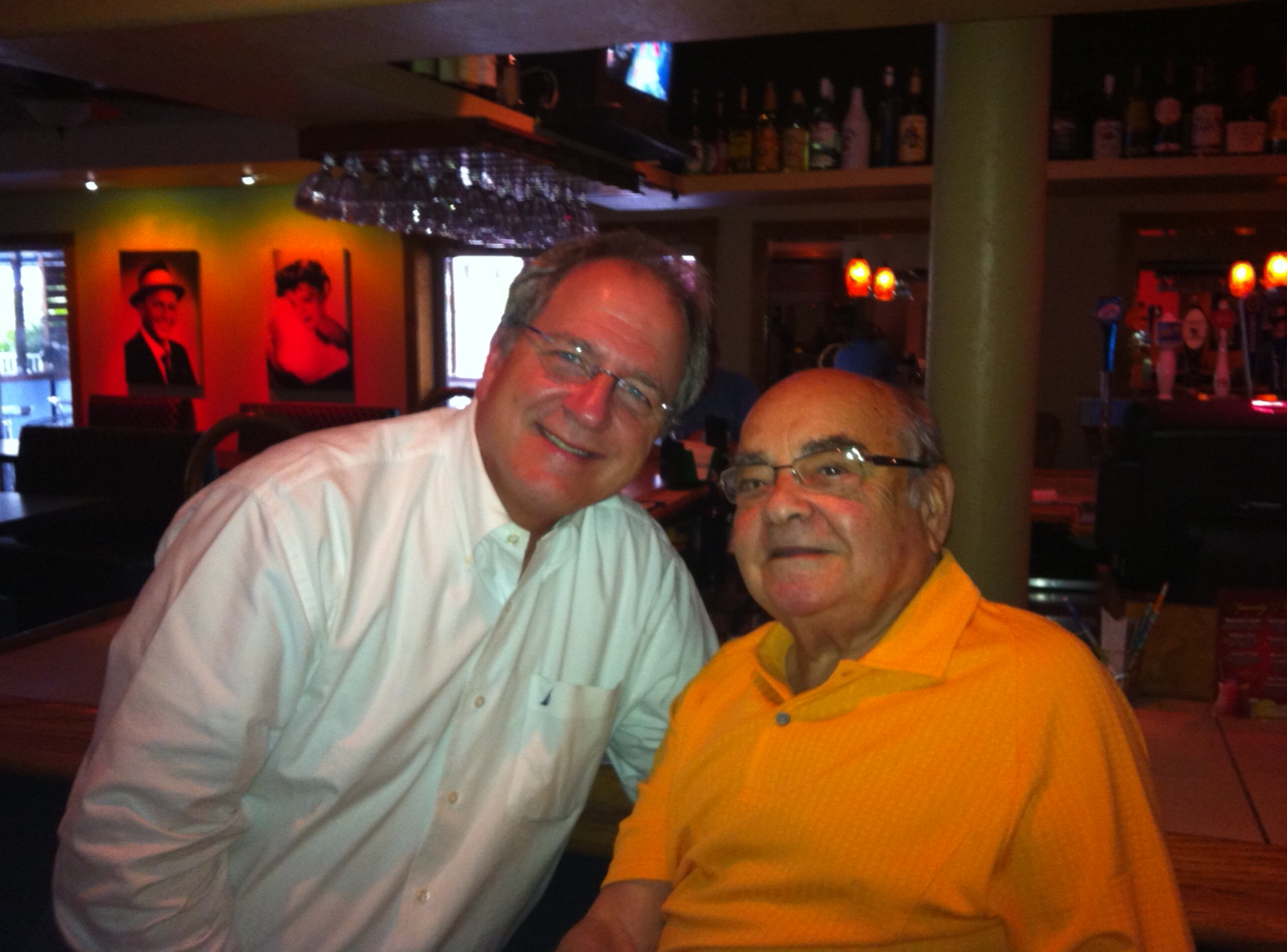
Photo Credit: The Purple Jacket
The price of Caregiving is not fixed, it is different for everyone. But if you don’t recognize the personal cost in Caregiving, you can lose yourself in the process, and that cost is priceless. What are the signs of losing yourself: weight gain, loss of focus/clarity, financial stress, spiritual uncertainty, your own purpose, professional satisfaction, detachment just to name a few.
For people who care, this is a conundrum. We are always asking ourselves…”Did I do enough; could I have done something different.” 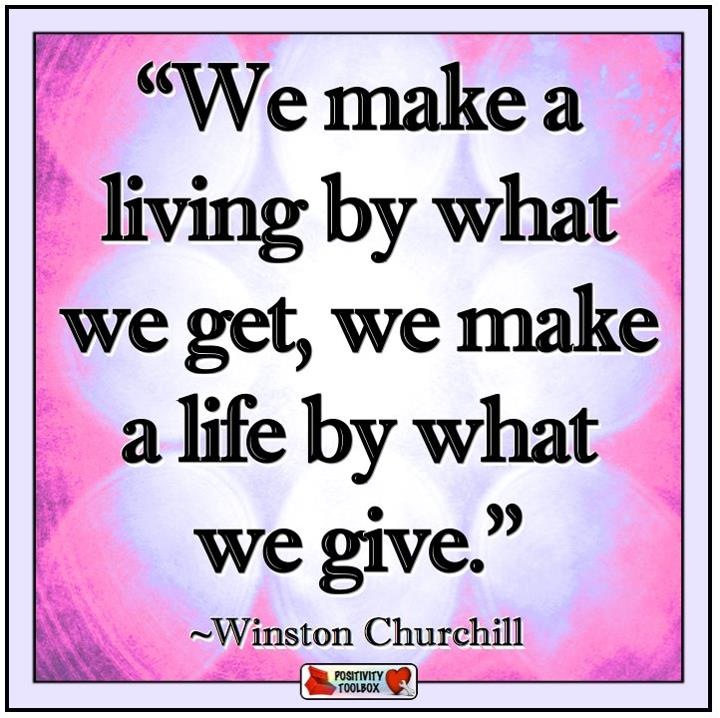
Yet what we might ask ourselves is…
Are we always looking at the problem, and not the solution?
While I do not intend to lose focus on the care of ‘The Little One’, I am starting to refocus on caring for myself. This has been a revelation of sorts because ‘The Little One’ has been asking me (telling, demanding, requesting, you get the picture) to take better care of myself. Yet immersed in this care and unwilling to listen, reality has come full force. How can I be a good caregiver, if I can’t take better care of myself?

Photo Credit: The Purple Jacket
It’s simple:
Eat Less… Move More
Focus on Solutions…Not Problems
Never quit caring… Especially for yourself
You see…We might have Cancer…
but Cancer does not have us!

Filed under Caregiving, The Purple Jacket
 This past week I had lunch with a couple from my neighborhood. I got to know them about a year ago while I was out for a walk and immediately liked their company. They met K only once, on a day I took her out in a wheel chair to get some fresh air and take in the wonderful landscape of our community.
Over lunch the husband, H, told me about a fight he waged, a number of years ago, with a large cancerous tumor in his throat. His tales of having to suffer through chemotherapy and radiation were frightening and heartbreaking. The upside was that it all worked. He actually beat back the cancer and is still living, and I have to say looking quite healthy. At 70 plus years he looks younger than me.
View original post 1,085 more words
Filed under Caregiving, The Purple Jacket

THERE
HERE
and maintain a healthy lifestyle while you care !
Filed under Caregiving, The Purple Jacket
It’s never too late to give up our prejudices. – Henry David Thoreau
You might remember an earlier blog post where I talked about a question that was posed to me by a good (straight) friend of mine, his question was simple: ‘What’s different about LGBT Caregiving‘. In that blog post, I wrote “ A very profound question that is easy to answer, yet difficult to explain. “Caregiving in and of itself is the same for every couple, you simply care for the one you love. The difference for the LGBT caregiver is when we have to interact with systems outside of our home that are out of our control.”
As an LGBT caregiver and advocate, my response to that important question pales in comparisons to the magnificent and gut wrenching documentary, “Gen Silent”. The real life stories of love, commitment, discernment, hope, happiness and despair told through the lens of “Gen Silent” are gut wrenching, yet important for all audiences in order to understand the plight of LGBT seniors in America. Producer/Director Stu Maddux does a splendid job in piecing together these LGBT pioneers who helped paved the way for what we know today as Gay Pride.
We should all be indebted to them.
Throughout their life, LGBT seniors have experienced discrimination solely for being ‘different’. LGBT Seniors are one of the most underserved communities in our nation. Today’s LGBT seniors grew up in a time where they were told that homosexuality was not only a mental illness, but also a crime!
Systems can be unfair, yet pioneers like those in this marvelous film are the ones who help foster change. Out of the shadows and into our hearts, this documentary provides viewers with critical examples of why NO senior should be left behind. This issue is not a local issue, it is a universal issue. Somewhere along the line in our discussion about critical issues that face our society, we have lost the ability to look and talk about these issues empathically.
No matter what side of the fence you are on in regards to gay marriage; Equality in not a privilege, it is a basic human right. Through the lens of “Gen Silent” you will see the true meaning of love and why equality and equal rights are so important in our society today because everyone deserves a perfect sunset to their life.
Kudo’s to Stu Maddux and the staff at the LGBT Aging Project for a job well done. Thank You to Ellen Wender of Creative Arts Enterprises and Treece Financial Group for taking the initiative to bring this documentary to South Florida. Thank You to Diane Lade of the Sun-Sentinel for writing such a superb article on “Gen Silent” how nursing homes can push gay seniors back into the closet.
For information on how you can bring “Gen Silent” to your community, click here to visit the films website and ‘like’ them on Facebook, too!
To learn how your agency can develop LGBT-sensitive policies, train staff, create welcoming environments, and receive CEU’s visit SunServe Social Services.
“We might have cancer…but cancer does not have us!”

Filed under Caregiving, The Purple Jacket
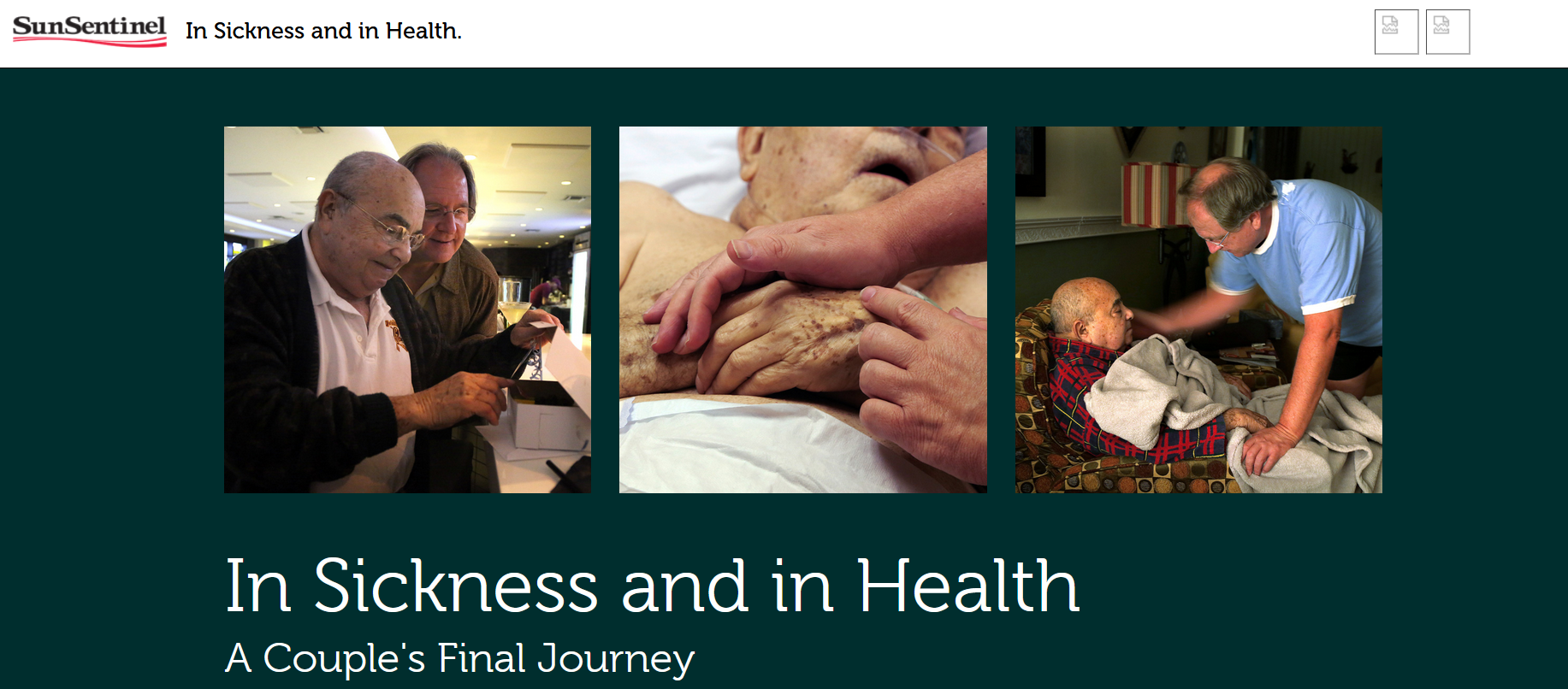


Nominated for a Pulitzer Prize in 2015, Our Caregiving Story "In Sickness and In Health: A Couple's Final Journey" written by Diane Lade and photgraphed by Carline Jean from The South Florida Sun-Sentinel. Click on the photo to be taken to the original story. Photo Credit Carline Jean/Sun-Sentinel

Story 2: "Life After Death: Couple's Story Sparks Change." Click on the photo to be taken to the second story. Photo Credit Carline Jean Sun-Sentinel

Story #3 "Saying Goodbye" Click on the photo to be taken to our final story. Photo Credit Carline Jean/Sun-Sentinel

Visit Our New Whole Care Network Website by clicking on the Whole Care Network icon!

"What's The Deal With Caregiving?" is available on Amazon. Click above to see the reviews of the book and to purchase a copy of your own


As a certified accessible travel advocate, I can book all your travel plans! Ask me how you can have anything from oxygen to a hoyer lift delivered to your cruise ship stateroom or hotel around the world! For more information email me at chris@tlocruisesandtours.com

Healing Ties radio is syndicated in the United Kingdom on UK Health.com! Click on the icon to follow the show in the UK


 The Purple Jacket