Tag Archives: Gay Seniors

A Night with ‘Harriet Craig’


This past weekend, we took the opportunity to motor  to Mount Dora, Florida.  Funny how the last two weekends have developed for us; two weekends ago we were on the verge of heading to the hospital, this past weekend, we are traveling to Mount Dora.  It is difficult to know just what to expect when you are dealing with cancer.

Photo Credit: The Bow-Tie-Guy

Why Mount Dora, Florida you ask?  Going back to their days in Manhattan, ‘The Little One’ has a friend of 60+ years living in Mount Dora.    Mount Dora is a little town just north of Orlando, known for its quaint antique shops.   It is a beautiful town and surprisingly, has plenty of things to do.  But this was not a  weekend for tourism, this was a weekend of storytelling and laughter!

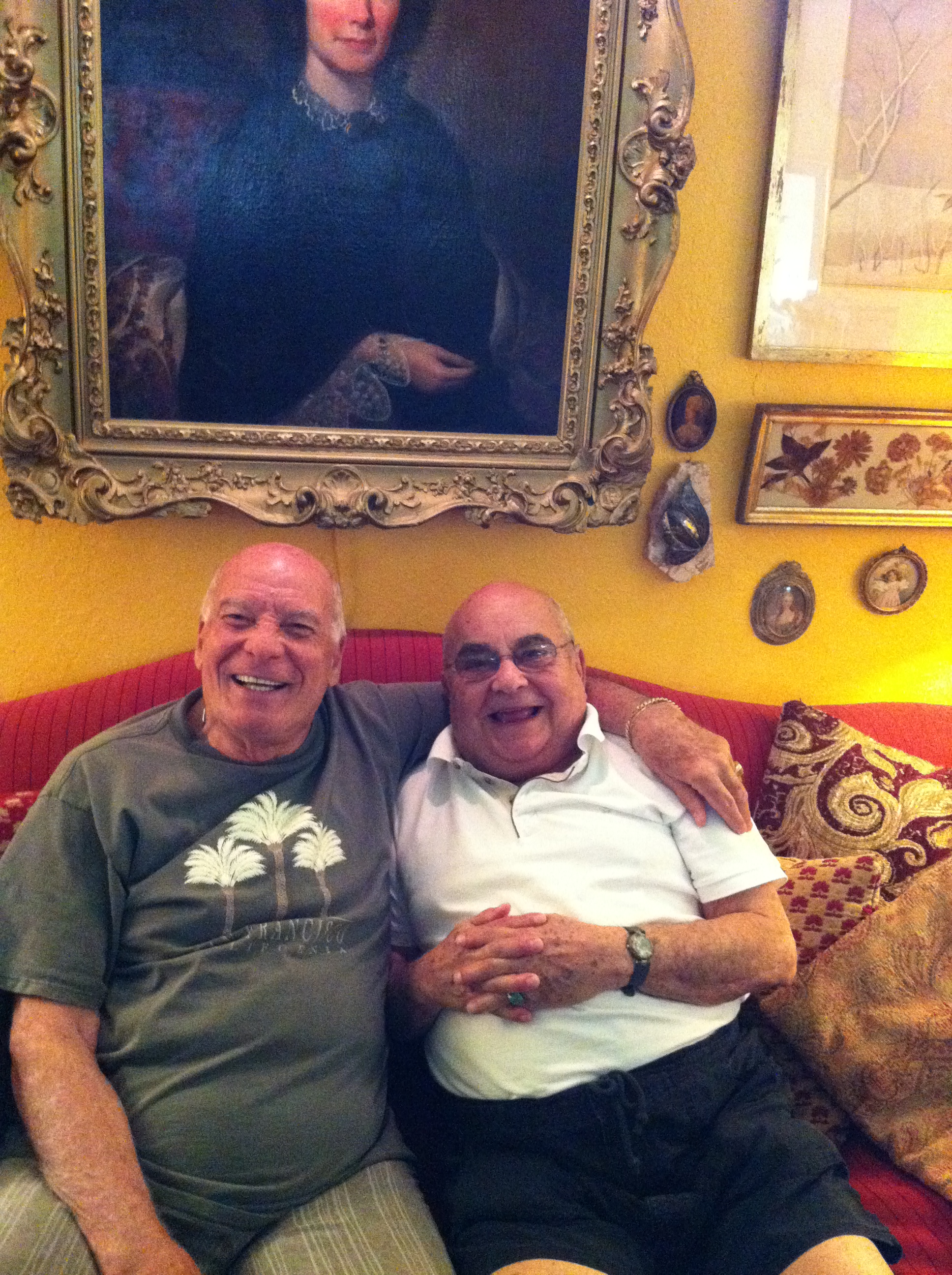
With over 60 years of friendship behind them, the conversation was unrestrained.  Names from the past,  (celebrities to boot!) stories that never ended.  To them, yesterday was today and tomorrow will come: it was a beautiful experience.   Finally the name…’Harriet Craig’ was blurted out and the laughter got more pronounced.   Harriet Craig was a nickname  given to ‘The Little Ones’ friend years ago because of his constant need to clean the apartment he shared in Manhattan with his partner of over 40 years.  Apparently, ‘Harriet’ just could not stand a dirty ashtray, one flick of the ash and up Harriet would go to clean the tray; always in constant motion, always on top of the conversation.  Once I learned why Harriet Craig, I understood the connection to the character in the movie as the villa was in impeccable condition!   As we moved on to dinner, it was easy to see who was in charge…Harriet Craig!     

Photo Credit: Wikipedia

Harriet Craig is a 1950 movie played by the legendary Joan Crawford.  The movie credits go like this… ‘Domineering Harriet Craig holds more regard for her home and its possessions than she does for any person in her life. Neurotic perfectionist Harriet Craig (Crawford) makes life miserable for everyone around her.’  While the description of the character in the movie does not accurately depict ‘The Little Ones’ friend, the metaphor is there in order to create the ‘sting.’

I was told that I was not old enough and privileged enough to call him ‘Harriet Craig!’

Their stories sounded quite familiar to that what you would hear today. If you are a ‘Sister’ you know what I mean. Long standing friends reminiscing about their past, grateful for their partners, their friendship and their freedom to be who they are.  Gay Marriage, Equal Rights and the sorts, all talked about in their day, just not in the volume that we hear today.   

Yet…Who Are They?

They are two close friends, in separate (gay) relationships, lasting over 40 years each, which is quite the accomplishment, no matter what side of the fence you are on!  Yet these accomplishments often go unnoticed in our society as we here more about what’s wrong with gay relationships than what’s right about gay relationships.  They are your uncles, cousins,  they are your friends…

Who Are They? 

Photo Credit: Unknown

They are your neighbor right next door.  We have all heard the phrase…’home is where the heart is.’  That phrase applies to everyone’s home, not just a selected few.

Our friend in Mount Dora is just a few years older than ‘The Little One’, leads an active life, accepted by his cohorts, active in his neighborhood, has dinner with his neighbors and volunteers at hospice.   He is your neighbor. 

Who Are They? 

Stonewall Inn 1969 Photo Credit Diane Davies

They are two men who lived not only during the time of the Stonewall Riots, they lived in the mist of the Stonewall Riots where  friends of them were killed just for being who they are.  The riots inspired LGBT people throughout the country to organize in support of gay rights, and within two years after the riots, gay rights groups had been started in nearly every major city in the United States.   They are your pioneers…

This weekend, when you see all the stores on the news about Gay Pride weekend, remember those Gay Seniors who live alone and cannot get to the parade.  Remember those Gay Seniors who still live in fear; Remember those gay seniors who lived and worked in the trenches in order to bring LGBT equality issues of today to the forefront.

And finally, remember the thousand upon thousand of Gay Seniors who have lived their life in committed and long lasting relationships only to be denied their equal rights.

 Who Are They?   

They are your American Seniors, who just happen to be Gay.

Photo Credit: Webshots

You See…We might have Cancer; but Cancer does not have us!’

Photo Credit: The Bow-Tie-Guy

2 Comments

Filed under Caregiving

Communities of One?


Photo Credit: Free Digital Photo’s

Roads that appear smooth can turn bumpy on a moment’s notice.  That happened to us this weekend as ‘The Little One’ experienced some ‘bumps in the road’ with his esophagus.  There has been so much smooth sailing over the past month or so that the events of this weekend took us by surprise.  We take so much for granted in life, and expect our systems to run without a problem.  Since the diagnosis of esophageal   cancer in August, we have learned that food can be a funny thing.  There is no rhyme or reason why one form of food has more difficulty passing the ‘bump in the road’ in his esophagus more so than another does.  It just happens.

While the three instances this weekend were alarming, they reminded us that no matter how good we might feel, there is  always an issue lurking around the corner.  I am happy to report that as of Sunday night and moving into Monday, ‘The Little One’ is doing well and there has been no problems with the esophagus. These episodes take quite a bit out of us simply because of the unknown.  While the food pass ‘the bump in the road’…when is the right time to call 911?  It is a delicate balance and sometimes you just have to hope and pray the you make the right decision.

As I write about our weekend, I started to think about a man who I met through my work at SunServe Social Services.   This gentleman lives independently at Continuing Care Retirement facility and while there appears to be loads of activities,  he feels “on the outside looking in’ because as an LGBT Senior, his living environment is not sensitive to the needs of LGBT Seniors.

Some people might ask…Just what are the needs of an LGBT Seniors?

If you have to ask that question, then I think the best reference for you would be The LGBT Aging Center report on Language and LGBT Housing: Making Models that Fits all Housing. 

Aging in America is difficult enough; LGBT Aging is two-fold.   Think of it this way…As a kid every one of us had that awkward moment where we felt like we did not belong, we stood out in a crowd, or felt  left our by a group.  Today, across America, LGBT Seniors have those  same feelings and emotions we had as kids when they are thrust in facilities that are not sensitive to their needs.  Imagine trusting your care to someone who dislikes you for who you are…Remember Nurse Rachett?

Thinking about this gentleman  lead me to think…”what could be possibly be worse”… Living alone or living in a community where you are alone?

 [polldaddy poll=6145755]

While society is changing, we have a long way to go before there is acceptance. Overtime…with proper training, logical conversation, while using  active listening skills, change does happen!

Photo Credit: Free Digital Photos (he should be wearing a bow-tie)

I am happy to be associated with an organization like SunServe Social Services   who provides ongoing organizational consultation to help companies, organizations and service providers  in becoming more LGBT competent through policy and procedures alignment with best practices for LGBT care.  It is through awareness and sensitivity training where we step outside our comfort zone and learn that there are other ways at looking at life is making a difference in our community. 

Sure, my plans for this past weekend took a major detour as I had to make some adjustments in my life to care for the one that I love.  But isn’t that what life is all about?  What I was supposed to do this weekend was important, but as a caregiver, I am on call 24-7 and sometimes you have to weigh what actually is  important in life.

While we are secure in our relationship and know that these ‘bumps in the road’ are going to happen from time to time, I am left to  wonder about all those other ‘little-ones’ out there who have to fend for themselves in a system that is not accepting of them: I wonder about all those frail seniors who live alone just looking for someone to have a conversation with on a daily basis.   I wonder about all those seniors who live in a community, yet feel like they are alone.   Being alone in a community has to be the worst feeling anyone could ever experience in life.

 Let it be our goal that there will never be a community of one!

You, see…We might have cancer, but cancer does not have us!


4 Comments

Filed under Caregiving

LGBT Seniors, Invisible No More


LGBT Seniors, Invisible No More

Discrimination and legal inequalities take toll on health and health care

05.25.2012By Barbara Moran
LGBT Senior Citizens, social policy, social work, Robert B Hudson, Boston University School of Social WorkRobert B. Hudson says that some members of the health care community “have treated LGBT people with condescension, and that in turn has often led people to put off preventive services.” Photo courtesy of the Boston University School of Social Work

In 2009, according to the U.S. Administration on Aging, about one in eight Americans was over age 65. That adds up to 39.6 million people, or almost 13 percent of the U.S population. By 2030, there will be about 72.1 million in that age group, or about 19 percent of the population.

While many studies have been done on America’s aging population, little research has focused on a group facing special issues as they age: the lesbian, gay, bisexual, and transgender (LGBT) community. Today’s LGBT elders have lived through decades of discrimination, which, it turns out, has huge repercussions as they age. Yet LGBT seniors have been largely ignored in policy on aging.

To help address this oversight, Robert B. Hudson, a School of Social Work professor of social policy and managing editor of the journal Public Policy and Aging Report, devoted an issue to the topic of LGBT seniors, with articles written by a range of researchers, service providers, and advocates involved with LGBT policy concerns. According to Hudson, the issue received more positive feedback “than just about anything else we’ve done.” In his introduction, he writes, “These individuals have remained nearly invisible to the community of advocates, researchers, practitioners, administrators, and politicians who associate themselves with the modern aging enterprise.”

BU Today recently spoke with Hudson about the insights gained from the project and what steps need to be taken to help aging members of the LGBT community.

Public Policy & Aging Report, Integrating Lesbian, Gay, Bisexual and Transgender Older Adults into Aging Policy and Practice

BU Today: Why did you focus an issue of Public Policy and Aging Report on the LGBT community?

Hudson: One thing we’re always trying to do is highlight under recognized issues, and this is one that really has to be near the top of the list. There is simply not much of a literature devoted to older LGBT people. There is a whole world of aging research and aging agencies that provide a range of benefits to older people, and there is a separate series of agencies and research that address the LGBT population. But they often don’t come together.

Why do you think that is?

Well, as a political scientist, I see it centrally rooted in bureaucratic behavior. The aging agencies are organized around classic aging-related issues like nutrition, social services, and legal services. The LGBT community has never had the same level of attention.

So what’s been the result of that gap?

Massive under service. When you look at the literature, LGBT access to health care is suboptimal. And that’s for two reasons: one is that some members of the health care community have treated LGBT people with condescension, and that in turn has often led people to put off preventive services. More broadly, LGBT individuals are often denied protections such as survivorship, visitation rights, and living wills, because the legal system does not recognize their living arrangements.

What health issues other than access to health care are specific to LGBT seniors? The Report notes higher levels of smoking, drinking, and rates of depression.

The mental health issues are the ones that stand out, and I think it’s something that the larger population does not appreciate. The stressors around discrimination in those communities have been so high for so long that substance abuse issues are much more widespread than the larger public thinks. People ought to know that discrimination has consequences.

The other issue to be mentioned is HIV-AIDS. And again, something that is underrecognized is that people who are HIV-positive are getting older, thanks to drugs that are turning HIV-AIDS into a chronic illness rather than a death sentence. But it is also true that people are contracting AIDS over age 55 at somewhat higher rates than before.

That’s the group you’d think has been the most indoctrinated about safe sex practices.

Indoctrinated, yes, but on the other hand, I think it’s something about aging. I think some people may say, “We’re old, we probably can’t get it.” But in fact, as you get older, the body becomes more fragile, and it may make transmission more likely.

Is there also a lack of safe-sex education, most of which seems targeted at young people, for older adults?

I think that has been the case. A lot of the public health initiatives within the LGBT community are aimed implicitly—if not explicitly—at younger people. The classic imagery we’ve had of older people in general is relevant here; they’re frail and alone or cut off in nursing homes, so they tend to get forgotten and excluded from all sorts of helpful interventions. And then members of the aging community, either through lack of interest—or in some cases, discrimination—may not want to engage with the older gay population. And so older LGBT folks really do fall between the cracks.

LGBT seniors lived through decades of discrimination, with homosexuality a crime or deemed a mental illness. The Report says 82 percent have been victimized at least once. With homosexuality so much more accepted now, it’s hard to realize what they went through.

Well, for somebody my age it’s not hard to remember. I mean, you could get in all sorts of serious trouble by identifying as gay or being seen as gay—bullying, violence, employment discrimination, health care, the whole gamut. I think most people now don’t recognize how tough it was for LGBT people to grow up in the world they did. And if you listen to today’s political debate, there are candidates out there who are inferring things about certain populations—including this one—that are pretty nasty.

What are the major impacts on seniors of coming of age with that level of hostility?

Certainly there are impacts in mental health issues, but also in economic issues. If you were discriminated against at age 20, 30, and 40, trying to get a decent job, trying to get promoted, trying not to get fired, hoping to be invited to the company family picnic, needing to go out on the golf course with the guys where the deals are being made, and they shun you because they suspect you’re not one of them—there are huge career ramifications.

So it really is a lifelong thing. In aging we talk about “cumulative advantage” and “cumulative disadvantage.” If you went to Andover and Harvard when you were younger, you have a better train ride than somebody who didn’t. And in this case, to have been knocked off career and health care and other rails early on by reason of discrimination, a trajectory that might have gone quite high will instead be flat. And in some ways it gets worse in old age. The passage of time amplifies the discriminations you’ve encountered over the course of 30 to 40 years.

The Report says LGBT seniors are twice as likely to live alone as heterosexual seniors, and four times more likely to have no children. How does this affect their support network?

It’s a huge issue. In the case of chronic illness, something like 80 percent of all care is provided by so-called informal supports—mainly family, notably wives, daughters, and daughters-in-law. This is a population that has much lower marriage rates and somewhat higher levels of disaffection from their biological families due to their orientation. There are fewer children, fewer spouses, and the extended family of aunts, uncles, nieces, and nephews may also be thinner. That is compensated for in part by friends, but the lack of family-based informal supports is a concern in this community.

The LGBT community seems to have exceptionally strong social networks, for just those reasons. But in this regard that doesn’t seem to compensate enough. Do you think this will change for the next generation of seniors?

I think over time, with greater acceptance of these communities, yes it will get better. But it’s going to be a long process. It’s interesting the extent to which same-sex marriage has taken hold in many parts of the country, which certainly wasn’t the case 20 years ago. But it’s going to be a very long process.

With gay marriage gaining acceptance and many more gay couples having or adopting children, is it likely their support networks will be strengthened?

I think that’s right, but I think it will vary a lot geographically. There are still a number of states where gays and lesbians cannot adopt children.

Do you think we’ll see gay- and lesbian-specific nursing homes at some point?

Interesting question. There are retirement communities—I don’t know their legal status—that certainly have attracted LGBT people. There are at least two or three dozen retirement areas in various parts of the country that are known to be attractive to members of the LGBT community. It wouldn’t be possible in most nursing homes because it would violate Medicaid reimbursement laws.

So what should be the top priority for the LGBT senior agenda? What should researchers and policymakers be thinking about to best serve this group?

On the policy level, I always think first of Social Security benefits. If you don’t have legally recognized dependents, you can’t get a dependent benefit. If you die and you had a partner, but you were not legally married—and to the federal government you can’t be legally married if you’re gay or lesbian—then there’s no survivor benefit.

In the health care world, prohibitions tied to visitation and to proxies and living wills are big things that have to be overcome.

But I think the biggest issue is in some ways the hardest issue to tackle, and that is acculturation and acceptance: being fully accepted as part of the range of American citizenry. LGBT elders may not be exactly like you, but there are lots of people who aren’t exactly like you, so let’s get over it, old and young alike.

View a copy of the Public Policy & Aging Report issue “Integrating Lesbian, Gay, Bisexual and Transgender Older Adults into Aging Policy and Practice” here.

Barbara Moran (COM’96) is a science writer in Brookline, Mass. She can be reached through her website. Permission to post this article on ‘The Purple Jacket’ was granted by Barbara Moran.

1 Comment

Filed under Caregiving

What’s different about LGBT Care giving?


 I have to admit, I have had a difficult time writing these past few weeks.  “The Little One” continues to excel now that we are settled in South Florida.  While there has been a couple of flare ups recently with his esophagus, all in all, his progress continues to exceed expectations.   We are most thankful.

While reconnecting with a good friend of mine here in South Florida, we started a conversation in regards to Caregiving.    As a PHD and LCSW, my friend is a trusted advisor who just happens to be straight, but not narrow!  🙂

One morning over breakfast he asked me…”What exactly is different about LGBT Caregiving.”   A very profound question that is easy to answer, yet difficult to explain.   “Caregiving in an of itself is the same for every couple, you simply care for the one you love.   The difference for the LGBT caregiver is when we have to interact with systems outside of our home that are out of our control .”

I continued on with an example so that my friend could better understand my position.  (Speaking to my friend now)  Consider both of us  arriving at the hospital emergency room as caregivers:  you are attending to your  wife, me attending to my partner.  The farthest thing on your mind on the way to the hospital is how will you, as the husband, will be accepted by the hospital staff.  

Photo Credit: Free Digital Photos

On the other hand, when we walk into the hospital  there is always the aspect of doubt lurking behind those doors …’What is the nature of your relationship,’  is a commonly asked question when two individuals of the same sex appear on the scene.  You walk in with your wife, the staff and attendants at the hospital   presuppose that you are a married couple. We on the other hand are constantly in fear of losing access to the one that we care for and love.  I doubt you travel with your marriage license or Power of Attorney on a regular basis in order to prove your relationship in these professional settings? I never leave the house without a copy of all our legal documents.  Even with the legal documents,  that does not guarantee acceptance as often times we will have to deal with an employee’s individual bias and bigotry.

It was at that moment that a ‘red light’ went on in with my friend.  “I completely understand the issue about marriage equality now.”    The conversation continued on as it relates to social security, benefits, the entire, housing, pension, etc. (I will be blogging about the marriage equality issue later this week)    What this  conversation demonstrated to me was that when you put a face to an issue, you have a better chance of  understanding the issue at hand.  This is exactly what happened with my friend.  What was foggy, now was  clear.    All it took was a clear, everyday example to help turn the light bulb on.  It was nice to teach a PHD a trick or two; but we have a long way to go with this important issue that faces our society and aging population today!

  You See…We might have cancer, but cancer does not have us!

1 Comment

Filed under Caregiving

In These Shoes Part III


The ‘new shoes are feeling just fine…so much so, the ‘Imelda Marcos’ of South Florida has decided to come out…rather…clean out his closet!

Photo credit: ‘The Purple Jacket’

One thing the real Imelda never did; was something that made me proud of ‘The Little One’

Photo Credit: ‘The Purple Jacket’

When you give up something, it always comes back two-fold!

You see…We might have cancer, but cancer does not have us! 

Leave a comment

Filed under Caregiving, The Purple Jacket

SunServe and The Purple Jacket: A Perfect Match


I am pleased to announce that ‘The Purple Jacket’ and ‘The Bow-Tie-Guy’ have joined the staff at SunServe Social Services in Fort Lauderdale, Florida  as the coordinator of Senior Services.     SunServe Social Services is the home of the Noble A. McArtor Adult Day Care Center .  Opening in 2004,  the Noble A. McArtor Adult Day Care Center   has been on the frontier for serving the needs of the LGBT senior community in South Florida.

The Noble A. McArtor Adult Day Care Center has always had a special place in my heart as my close friend, Father Richard Orlando, was one of the first participants of the center when it first opened in 2004.     During his time at  Noble A. McArtor Adult Day Care Center, Father Orlando excelled in all facets of his life.  The staff and participants at the center were a major part in providing Father Orlando with a beautiful “SunSet” to his life!

Having been away from Fort Lauderdale for four years and upon returning to Fort Lauderdale in March 2012, I was shocked, surprised and impressed to see the growth of  SunServe Social Services in such a short period of time.   SunServe  has grown into a comprehensive social service agency, offering a number of professional services to the LGBT Community in Fort Lauderdale including:

SunServe Social Services provides high quality, compassionate, and progressive care for all, including those in financial need, minorities, youth, seniors, families, and those with life-challenging physical or emotional conditions.  The growth of SunServe Social Services is a truly remarkable and is a testament to the entire staff.
 
Forging ahead with this collaboration is a  perfect fit for ‘The Purple Jacket’ and ‘The Bow-Tie-Guy’ as we continue to talk about the real-life issues and needs  of LGBT Aging, Health and Caregiving
SunServe Social Services is rolling out a telephone tree to call our LGBTQ neighbors in Broward County who may be homebound or would like to touch base with someone every day.  If you are in South Florida, I urge you to become active in this program.

You:  Would have to make a commitment to call your client once a day – at a specific time you both find convenient – to check on them, give them an update and share some news.

 You:  Would make a commitment to serve for 6 months at a time.

Yes, you can take a vacation but you will have to let your phone team leader know so another volunteer can cover your client.

Yes, you can go back north for the summer; you might decide to continue your calls from “Up North” or we can ask another volunteer to call for you.

Yes, we can utilize your services for the months that you are here.

Yes, there is a three-hour training that you need to attend on Saturday, May 19th from 10 – 1 PM at SunServe.

Yes, you can have more than one client.

Yes, you will have to keep a brief daily log and report to your telephone team captain once a month on how you are doing, how your client is doing and if any special situations have arisen.

Yes, you can refer friends into the program so they may receive calls.

If you are in Broward County and interested in participating , please call Andrew Forester at 954-764-5150 for a quick phone interview and to sign up for the training on Saturday, May 19 here at the SunServe Office.

2 Comments

Filed under Caregiving, The Purple Jacket

LGBT Caregiving Blog Series


I was privileged to have been had one of my blog post published recently  in the  American Society of Aging; LGBTcaregiving section. ASA’s Aging Issues Network (LAIN) is a great source for LGBT Caregiving and Caregivers.

‘Two Relationships in One’  

To be entrusted with the care of another human being is one of the greatest honors that can be bestowed on you.  It takes on meaning that is beyond approach.  New parents have nine months to prepare for the responsibility. Doctors and nurses undergo years of rigorous training for the work that they do.  But caregivers can find themselves thrust suddenly into roles that they do not choose when called to care for a partner, spouse or loved one after a diagnosis or an accident.

At a moment’s notice you become a caregiver, without any warning or time to think things through. You feel like you have no idea of what you are supposed to do, so you do your best, as you follow your instincts and common sense. You embrace the new reality. You simply care for the one you love.

When you become a caregiver for your life partner, a new and uncharted realm opens up.  Two distinct relationships must now be blended into one. The familiar partner from the past remains and is always present.  But now there is someone different on the scene – someone with a significant illness.

Suddenly, two people sharing a life together will need to face challenges that cannot be left unattended.  A whole set of new and hard-core emotions are likely to intrude on the relationship. Worry, detachment, mortality, anger, fear of abandonment and having to live life alone, to name just a few, begin to intertwine with the idiosyncrasies of your personal dynamics. They can lurk in a caregiver’s mind when faced with a life-and-relationship-altering illness in your partner.

Care giving is an intense experience that asks you to surrender yourself for the needs of someone else.   Often times you have to give up the things you love in order to care for the one you love.  Even though it may feel like a hardship, you make the choice because you know that it is what love and commitment is all about.  Yet it is not that simple, because care giving can be an emotional, physical, and interpersonal roller coaster that is both tremendously rewarding and frustrating. These emotions can surely test even the best communication and trust in a relationship.  The common denominator in the blending of these two relationships is communication.

Communication is a funny thing; just like relationships.  It is funny how the two go hand in hand.  Successful relationships are built on strong communication and trust.    It is through honest communication that the true essence of a partnership is revealed.  This does not change when you add the role of caregiver to the mix.  Communication has to be the focal point for conveying the wants and needs of the one who is ill, and this must be accomplished without losing the identity of either the partnership or the caregiver.  The term “delicate balance” takes on a whole new meaning.

Frequently reviewing and maintaining clarity in your roles becomes crucial so that your judgment and decision-making skills are based on sound facts instead of raw emotions. How much can the mind and body take when faced with so many changes in such a short period?  I think that really depends on the couple’s ability to safely, clearly, and honestly communicate their wants, needs, and desires as indicated by the partner’s health needs first and the personal relationship second.

While I have no doubt that caring for my partner (who has been diagnosed with esophageal cancer) has strengthened our relationship, it has changed our relationship at times, too.  I have seen someone who was firmly independent become dependent in certain areas of life that have been difficult for him to accept.   Stepping outside one’s comfort zone and asking for assistance with mundane everyday chores adds stress to both parties.  That is undeniable!

Caregivers often become the voice for the one who is ill. As caregivers, we have to be mindful that we are in a supporting role;   caregivers are the advocates, not the “deciders”!  In this supporting role, we must remember that what we want for our loved one may not necessarily be what the loved one wants.  What a slippery slope this becomes when the person you are caring for is your life partner!

As part of an LGBT intergenerational couple, I have, on occasion, observed discrimination in our health care system. Here again, personal political preferences may need to be deferred in favor of pragmatism because I am in the role of caregiver.  Successfully addressing and focusing solely on the needs of my partner is paramount.  There will be plenty of time to step up and do what is politically right once I have insured his proper care.

Life’s journeys are not often driven on smooth roads, but we can always hope for a gentle wind at our backs.  That gentle wind is always fortified by love, trust, and commitment.  Come to think about it, aren’t all relationships manifested in this way?

We might have cancer, but cancer does not have us!” 

Below are links to other LGBT Caregiving articles which are worth your read.  I am honored to be a small part of this wonderful group.  I encourage you to bookmark American Society on Aging, especially their LGBT Caregiving Blog Series.  (The ASA logo above will take you to the ASA website)

Finding Pride in Caring: LGBT Caregivers Answer the Call from the Community
By Holly Deni

Sharing Care an Energizing Experience
By Nancy Bereano

Transcending Business as Usual
By Paul R. Blom

Complications of Transgender Caregiving
By Julie Ellingson


7 Comments

Filed under Caregiving, The Purple Jacket