In Studio Guest Today on Toula’s Tips For Caregivers


image

Excited to join Toula Wootan on her show, “Toula’s Tips for Caregivers” on Saturday morning, November 21 to talk about life after Caregiving ends. 

The stark reality for all Caregivers is that there is a beginning and an ending to our Caregiving journey, and in most cases, we are not prepared for either of these life events.  I will share my experience as a Caregiver and a former Caregiver who is learning how to care for himself.

Join us at 11:00 am (EST) on WBOB Radio 600 AM or 100.3 FM  in the Jacksonville, FL area or listen in by streaming on line at http://www.wbobradio.com.

Have a question for today’s show?Call us at 904.222.8255.

image

Toula’s soothing style is infectious!

I’m creating a life to love after Caregiving ends through advocacy, leadership, writing, radio, r

image

Chris MacLellan is the Author of “What’s The Deal With Caregiving” which is available on Amazon.com by clicking here!

image

Leave a comment

Filed under Caregiving, The Purple Jacket

Managing a Loved One’s Care from Out of State


Today we welcome guest blogger Max Gottlieb, content manager of Senior Planning in Phoenix, Arizona.

Managing a Loved One’s Care from Out of State

Whether you are in the same house, same town, or out of state, successfully caring for a loved one can be a challenge. Obviously, it is much easier to care for someone in the same city, but unfortunately families live in different states, oftentimes across the country. It may seem unmanageable at first, but there are many things you can do to provide support and maintain a better quality of life for the person in need of care.

1.) Keep on Top of your Loved One’s Health

The most important way to keep track of a loved one’s health is to create a schedule where your loved one is evaluated at designated intervals. This could mean that after each doctor’s appointment you call the doctor or that once a month, you check in with a care manager. It’s best to have more than one person doing assessments so you can hear multiple opinions. A primary physician is a good option since they’ll be most familiar with medical records, but people like physical therapists, care managers, social workers, or in-home caregivers can also offer valuable information. The important thing is to keep in constant communication with the people most frequently in contact with your loved one.

2.) Have a Plan in Place

Planning ahead is essential. Rather than waiting until a physical decline or medical emergency occurs, make sure you know what the next step is. That may mean you’ve scheduled a home health aid to come in or you’ve hired a care manager to manage your loved one’s care. Whether your loved one has a homecare professional coming in every day or once a week, make sure the caregiver is familiar with what their patient can and can’t do physically. This means talking to the caregiver on the phone and bringing them up to speed with your loved one’s conditions.

If there are any memory or behavioral issues, be sure to let the aid or caregiver know so they can monitor to see if anything changes. If there are no memory issues you are aware of, it’s still a good idea to ask a caregiver to keep a close eye on whether or not there are changes. Also, if there are times when a caregiver is not there, an emergency medical alert could be a good idea.

In the event that a physical decline or an emergency occurs, full time home health might be a good option, which can be recommended from the patient’s primary care physician. Additionally, adding on caregiving hours will help ease the effects of a physical decline. Depending upon the medically needy person’s income, assets, and condition, they may qualify for Medicaid, which will pay for a certain amount of caregiving hours per week. See this Medicaid guide for your state’s exact requirements as it does vary state by state.

3.) Around the Clock Caregiving:

Sometimes, depending upon the circumstances, patients may need a caregiving aid 24/7. Many caregiving agencies are readily able to provide 24/7 care and patients are able to age in place. For an out of state family member, this alleviates some worry about their loved one because there is always a caregiver around to assist. Many people forget to consider around the clock caregiving and usually believe assisted living or skilled nursing facilities are better options. Most of the time, however, these types of facilities aren’t staffed at the ratio of one caregiver to one patient. The major benefit of having a private caregiving aid is the one-to-one care provided, which equals a greater level of care in most cases. There is of course cost to consider and what works for some people may not work for others. Be open to your loved one’s changing needs and don’t be afraid to seek the help of private or state professionals.

Max Gottlieb is the content manager of Senior Planning in Phoenix, Arizona. Senior Planning provides free assistance to seniors and the disabled who need help finding and arranging care services, finding Phoenix assisted living, or applying for state and federal benefits.

Thanks Max for your timely suggestions!

Chris MacLellan is the Author of “What’s The Deal With Caregiving” and Host of “Healing Ties” Radio.

To purchase a copy of “What’s The Deal With Caregiving” simply click here! 

3D1

Screen Shot 2015-11-18 at 1.18.08 PM


4 Comments

Filed under Caregiving, The Purple Jacket

New Station, Same Great Show!


Everyone has a story, but not everyone gets to share their story.

Healing Ties radio returns in January with new guests, new topics, new format, and a new station.

It is about creating a life to love after Caregiving ends through advocacy, leadership, writing, radio, travel, cruises

What’s coming up?
Radio: Have a story to share, an idea for a show, or would you like to be a guest on the show…contact me!
Whole Care Network: Looking to list you product or business in our resource guide…contact me! (rates vary: reserve your premium location now on the Whole Care Network)

Hire Me: Looking for a Key Note Speaker, Lunch in Learn, I have a variety of topics to choose from or I can customize a presentation to meet your organization needs.

Coming Soon:
Travel With The Bow Tie Guy
Custom Bow Ties to support charity!

You can also visit our FB page at The Bow Tie Guy

Screen Shot 2015-11-18 at 1.18.08 PM

2 Comments

Filed under Caregiving, The Purple Jacket

When Caregiving Ends


Do not go where the path may lead, go instead where there is no path and leave a trail. Ralph Waldo Emerson

AARP’s monthly bulletin arrived in the mail and I have to say, it is impressive.  There are plenty of wonderful stories about Caregivers, terrific wpid-wp-1447734881364.jpeginformation and quite a bit of wonderful resources to help Caregivers on their journey.  November’s AARP Bulletin is a must for all Caregivers! As I paged through the magazine, I looked to see if there might be an article or two that might fit my current role as a Caregiver.  I sensed something was missing?   Thinking that I might find the information I was looking for, I moved over to AARP’s massive website and navigated to the Caregiving section and noticed about 2/3 of the way down the page an article on Coping with Loss – One Step At A Time.   I was sadden to see that the article was more than a year old!

My role as a Caregiver changed on March 9, 2014 when my partner, Bernard Richard Schiffer passed away. When Caregiving ends, lives are transformed forever.  All of a sudden, Caregiving is over and what is there left to do?  Immersed in  the care of someone else, now the (former) family Caregiver is learning to live life differently, learning to be a caregiver to themselves.   There are two aspects to Caregiving that is similar, there is a beginning and and end to Caregiving and in most cases, we are not prepared for either of these life events.

As we continue to celebrate National Family Caregiving month and recognize family Caregivers across the nation, I have to wonder if we are not missing an entire segment of family Caregivers whose Caregiving journey has ended. Filled with first hand experience that can be beneficial to family Caregivers,  we are learning to be a Caregiver to ourselves.  When Caregiving ends, its uncharted waters, but when we swim together, the distance to good health and happiness is not too far away.

I’m creating a life to love after Caregiving ends through advocacy, leadership, writing, radio, travel and cruises!

Chris MacLellan a former family Caregiver and is the host of Healing Ties Radio and the Author of “What’s The Deal With Caregiving.”

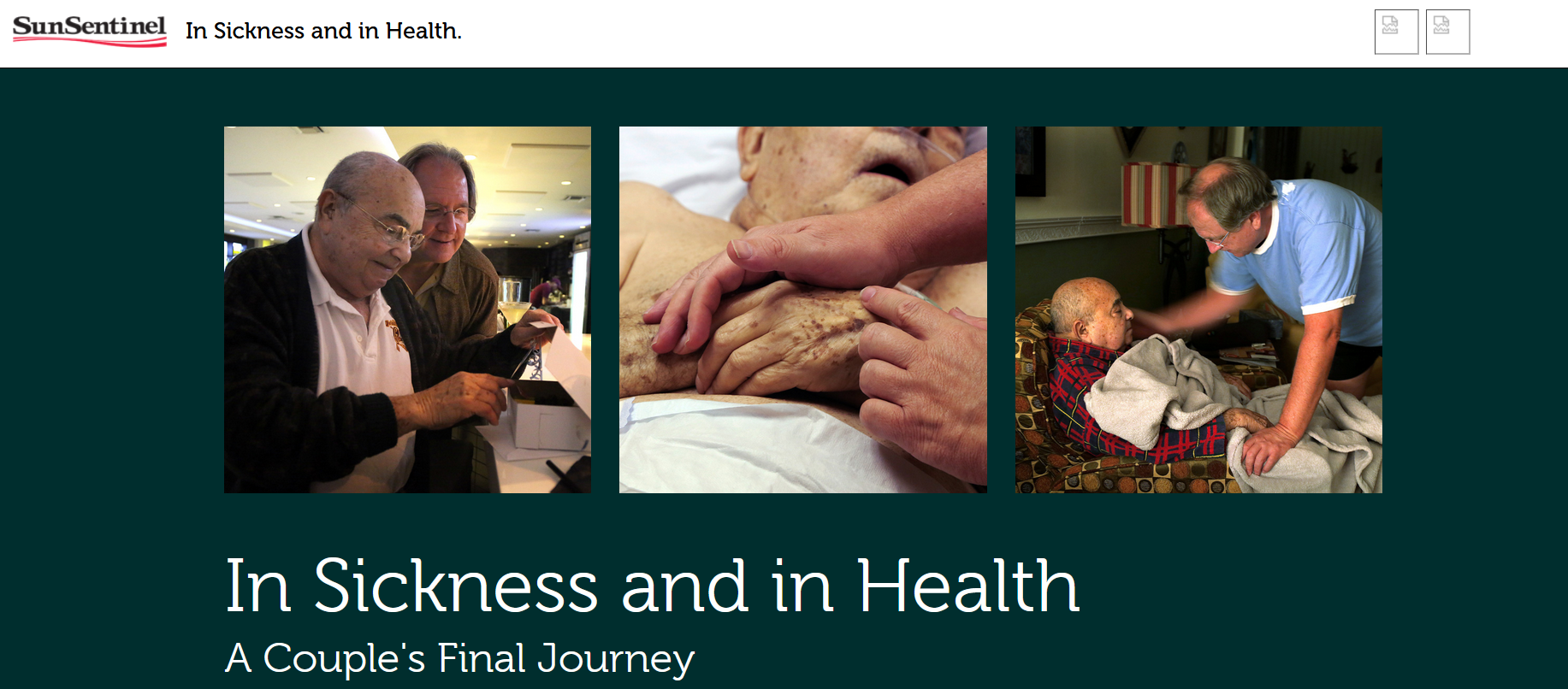
Our 2015 Pulitzer Prize Nominated Story In Sickness and In Health: A Couple’s Final Journey, still resonates today!

3D1


Leave a comment

Filed under Caregiving, The Purple Jacket

The Reviews Are Coming In!


Progress is man’s ability to complicate simplicity.  Thor Heyerdahl

I have to admit, that I have tried my best not to peek at the reviews on 3D1Amazon about my book “What’s The Deal With Caregiving” , but today I took a look and was quite surprised and pleased by all who have taken the time to write a review of the book.

It took me months to sit down and focus on finishing the book.  It has been a labor of love and goodness, and along the way, I have met new friends while remembering Richard in a very special way.  In the process, I guess I did complicate simplicity!

I want to thank everyone who has purchased the book,  along with thanks to those those who have taken the time to write a review.

Visit Chris’s Authors Page on Amazon.

See all the Amazon Reviews.

I’m creating a life to love after Caregiving ends through Advocacy, Leadership, Writing, Radio, Travel and Cruises…and you can create a new life to love too!

Everyone has a story to share, but not everyone gets a chance to tell there story!  Well now, here is your chance as Healing Ties radio is is returning to the air in January!  Interested in being a guest?  Have a topic for a show?  Simply email me at Chris@thepurplejacket.com

HealingTies


Leave a comment

Filed under Caregiving, The Purple Jacket

LGBT Caregiving: Is There A Difference?


The Opinion Which Other People Have Of You Is Their Problem, Not Yours ~ Elizabeth Kubler-Ross
sage-photo

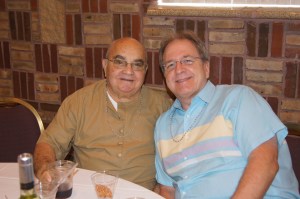
The Late Bernard Richard Schiffer and Chris MacLellan

Along the way during our Caregiving journey, I have been asked many times, “Are there any difference for same-sex couples in Caregiving?” “No, not really,” I would say, “as Caregivers, we simply care for the one we love.”

Caregiving usually not something that is on our bucket list of things that we want to do, Caregiving just happens!  Suddenly, an untimely diagnose is presented to us, or an unfortunate accident happens, and within a moments notice, two or more lives are changed and you are a family Caregiver. That is why there is no gender or orientation boundaries when it comes to being a family Caregiving, we simply care for the one we love.

Caregiving can be an intense experience which will ask you to surrender yourself and your own needs, for the needs of someonegroup-of-people-in-a-heart-10048754 else. Often you have to give up things you love, in order to care for the one you love.

Is there a theme here about love?

Sure there are some things that all of us can do to make our Caregiving journey “easier.”  Do you have your legal documents in place and up-to-date?  That includes our Living Will, Health Care Proxy, Power of Attorney, DNRO (No Not Resuscitate Order) Last Will and Testament: having these documents in place and up-to-date anyone, and readily available regardless of what side of the orientation fence you stand on is critical…for everyone, regardless of what side of the fence you live on!

However, I am not naïve and do realize that there are some differences for LGBT Caregivers.

For instance, Same-sex couples walking into a hospital emergency room are more likely to be “questioned” about the nature of their relationship where as a man and a women,  in the same setting, probably would not often face the same scrutiny. What is “funny” about this is that many of the unmarried heterosexual couples I spoke with after our 2015 Pulitzer Prize nominated story, In Sickness and In Health: A Couple’s Final Journey was published last year did not realize that their rights as a couple we not protected under the law, because they are not married.

In our society, we do not like to talk about death and dying, and that is why many people go years without updating their important legal documents that will ensure their wishes are followed at the time when a life transitions. But when you get right down to it, rights granted by the laws of marriage are mingled with death and dying. Did you know that in every state of the nation the “next of kin” for an adult is the spouse? Once you’ve been denied the right to be with the one you love at the time of their death, then you will fully grasp the meaning of marriage inequality. When asked “who are you’ by medical staff, or to be road signtold, “you’re not next of kin” after your partner has died, clearly demonstrates the injustice.

Has an unmarried heterosexual couple ever been denied the right to be with their loved on at the time life transitions?  My guess is probably so, especially when unscrupulous family members get involved.  LGBT couples know about that experience, too!

Same sex couples have always known a marriage license is not needed to solidify love. However, this license does solidify equal rights. Bigotry and hatred, unfortunately, will always surround us, yet the “license” provides clear legal protection to all married couples, just as having all of our legal documents in place will do for each one of us.

Yes, there are some differences LGBT Caregivers face, the differences maybe subtle to some, yet important to others; mind-boggling , yet fixable. While it is reported that LGBT seniors people are more likely to live alone, more likely not to access medical services in fear discrimination, there are many straight seniors out there who live alone, need transportation, fear going to the doctor.  We are all in the same Caregiving ship, trying to row upstream in a waves that sometimes makes it difficult to navigate.  Why do our “systems” want to hinder care to anyone, that is the puzzling question of them all?

Yes while “systems” might treat LGBT Caregivers differently, there is no doubt that love, care and commitment,  is the same for any two people, no matter what system you have to use, one’s gender or orientation, or who travel with on your Caregiving journey, because in the end, love wins.

P.s., If you have not had your legal documents reviewed by your attorney in the past two years, now is the time to do it pick up the phone, call your attorney, update your documents.  It is the right thing to do!

Chris MacLellan is the author of “What’s The Deal With Caregiving” and the host of “Healing Ties”
3D1

3 Comments

Filed under Caregiving, The Purple Jacket

Caregivers and Servant Leadership


A leader is one who knows the way, goes the way, and shows the way ~ John C. Maxwell

In November we celebrate National Caregiving month and it is always a good time to reflect and reconnect with good friends along the road during our Caregiving journey.  As I read through many of the national organization who are running promotions this month to signify National Caregiving month, I started to think about my role as a family Caregiver and what being a family Caregiver meant to me. Being a family Caregiver taught me a number of valuable lessons, but the most important lesson I learned was after Caregiving ended and Richard was no longer with us, and that lesson is the importance of self-care.   It is common for family Caregivers to lose themselves in the midst of Caregiving because our focus is so intense on our Caree.  Now 18 months after Richard made his life transition,  I am learning how to take better care of myself, (It is an up hill battle, that I will eventually win!)

Just recently I have come across a new meaning for family Caregivers, one that I have learned while finishing my masters degree in Leadership and Communication at Gonzaga University and that is the connection Caregivers have to Servant Leadership.  With my ministerial background and theology training, I had been looking forward to my class in Servant Leadership.  I was not disappointed.

Robert Greenleaf is known as the founder of Servant Leadership and once said: “The servant-leader is servant first. It begins with the natural feeling that one wants to serve, to serve first. The conscious choice brings one to aspire to lead. That person is sharply different from one who is a leader first, perhaps because of the need to assuage an unusual power drive or to acquire material possessions.”   While our class in Servant Leadership often focused on Business, Managers and Work Place Culture, I often commented in our classroom discussions about how Caregivers are Servant Leaders, because of our role to serve first, to advocate, to be the voice for those who could not speak, to put ourselves second.

Some of the characteristics of a work-place driven by Servant Leadership is that staff is fully engaged, feel a strong commitment to the cause, find purpose and have passion.  Servant Leaders are mindful of the whole, while understanding wpid-wp-1419526540344.jpegthat people have to feel empowered, lovable, connected and contributing.  I see quite a bit of philosophy entwined with Servant Leadership and Caregiving. Caregivers are commitment to the cause, and do find purpose and have passion to care.  Caregivers are mindful of their Caree, while understanding that their Caree needs to feel empowered, loved, connected and contributing.  Caregiving and Servant Leadership goes hand-in-hand because of the innate ability to think beyond our self.

In essence, we are all Servant Leaders in training and our training in Servant Leadership is on going, it never stops. Servant Leadership is about relationships.   Even after Caregiving has ended for me, I still in training, learning how to care for myself, while in the midst of being present to my family, friends and co-workers.  Caregiving and Life After Caregiving is about Relationships, too!

I see the connection to Servant Leadership and Caregiving, do you?

Oh…what did being a family Caregiver mean to me? It meant the world! Because in the end, just as in the beginning, we were fortunate to have some of the most meaningful conversations with each other, while spending every second, minute, hour, day, month and year together.  I would do it again with him, all over, with no regrets!

Chris MacLellan is the Author of “What’s The Deal With Caregiving” and Host of “Healing Ties: Creating A Life to Love After Caregiving Ends.”

To purchase the book, simply click here! 

3D1

2 Comments

Filed under Caregiving, The Purple Jacket

If She Had Lived to 100


Be happy. It’s one way of being wise. Sidonie Gabrielle Colette

Today, my Mother would have turned 100, unfortunately, she missed being a centenarian by just under 31 years!  Born in 1915 in New Orléans, my Mother was a women before her time.  Obtaining two college degree’s in the late 1930’s, she was talented and always seemed to be the “bell of the ball.”  Yet she passed away in 1984, just before her 69th birthday with seemingly, many unfulfilled dreams.

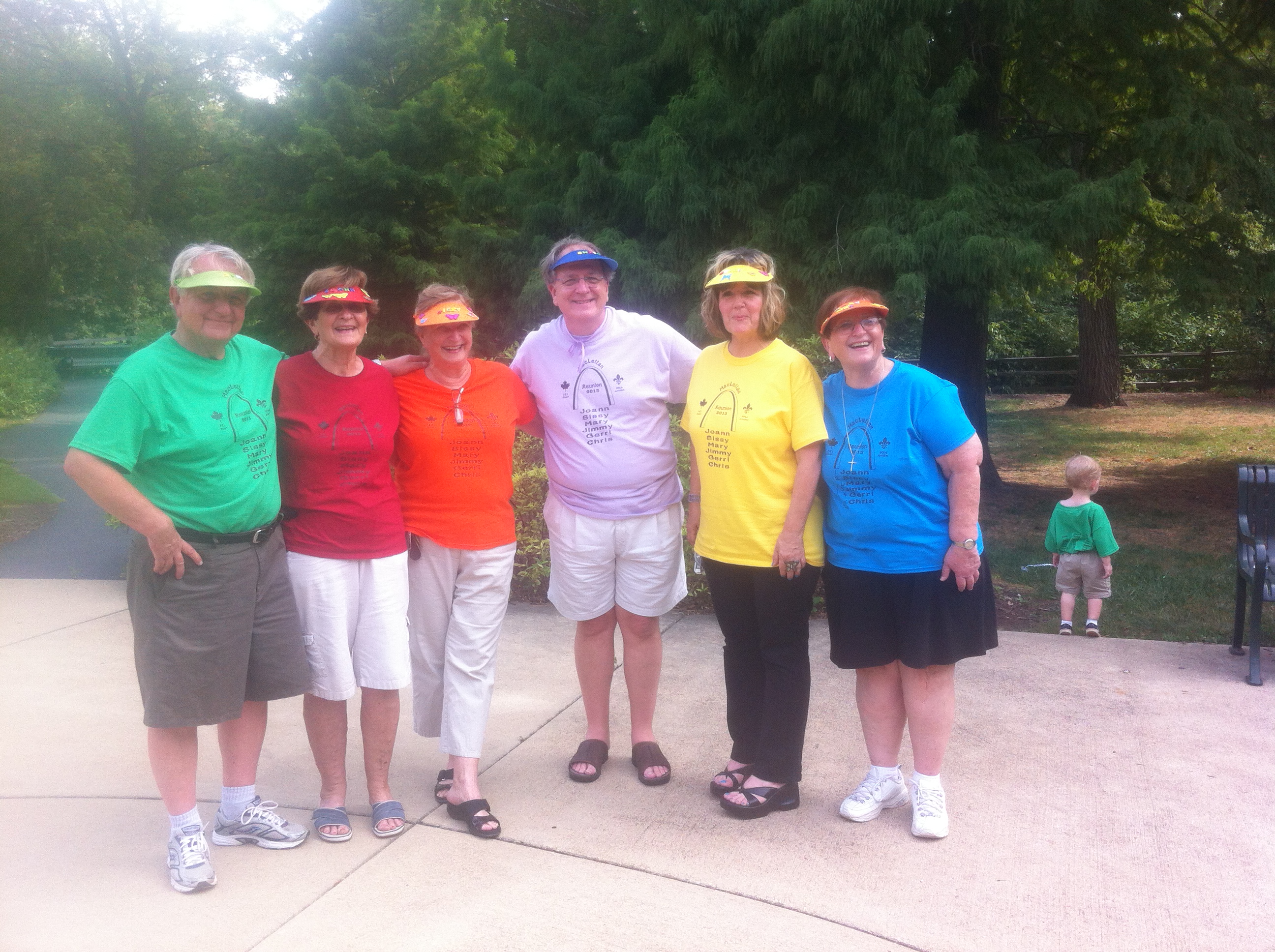
The MacLellan Six: Merrille, Mary, JoAnn, Jim, Gerri and Chris

The MacLellan Six: Merrille, Mary, JoAnn, Jim, Gerri and Chris

While “Gramma Bell”  got to know all of her 25 grandchildren, she missed out on getting to know all of her great-grandchildren which now reach past the number 40.  She missed out seeing the success of her six children, four of which have lived longer than her.  How medicine has changed over the years. But most of all later in life, she missed out on being happy, which is the saddest of them all.

1230082_10201224238681048_284042414_n (1)

Family Reunion 2013

I’m sure raising kids in the 40’s and 50’s was challenging, just as it is today.  Yet it is important to note that she loved being a mother, but being a mother kept her from fulfilling some of her dreams.  There are so many things in life we give up when we care for someone else, albeit a parent or a caregiver.

I’ve never been a parent, but I do know what it is like to be a Caregiver.  I sense there is quite a bet of similar traits in these two roles, most notably the ability to love and care for someone else.  Sure, I realize that some parents do not have the ability to love and care for their children, just as I realize that there are IMG_2082many Caregivers who are out there who do not love their Caree: I call those folks, “Caregivers By Default.”  But when you get right down to it, we all have the innate ability to care, it just  has to be nurtured.  I’m thankful for that I received the care gene from my Mom, I am mindful that life moves on, and it is better to move on in happiness, than in worrying about the past.

Happy 100th birthday “Gramma Bell,” we are all just doing fine!

Chris MacLellan is a radio show host and Author of “What’s The Deal With Caregiving”

Available on Amazon by clicking here

3D1

1 Comment

Filed under Caregiving, The Purple Jacket

Article: Why You Should Be Paying Someone to Drive You to the Airport in Your Own Car


Why You Should Be Paying Someone to Drive You to the Airport in Your Own Car

http://flip.it/y3JDO

2 Comments

Filed under Caregiving, The Purple Jacket

Caregiving and Traveling Can Happen Safely and Smoothly


Caregiving and Traveling Can Happen Safely and Smoothly

Tired of those trips to the doctor?  Looking for something different to do?  How about a cruise?  Yes, a Cruise! With proper planning, traveling with your Caree can be affordable, safe, comfortable and enjoyable as well.  Cruise ships offer handicapped accessible cabins and the ship staff is readily available to ensure that your trip is safe and secure.

Traveling with a wheel chair or scooter on a cruise ship is no problem! With Pride Mobility Go-Go Travel Mobility products, you are not land-locked! The Go-Go Scooters are designed to be lightweight and portable, so they are an ideal choice for travelers.

When making travel reservations, it is important to let the travel vendor know you are traveling with someone who has a special need.  Alerting the travel vendor will also help with pre-boarding. With proper preplanning, most if not all, travel vendors are happy to accommodate your special needs. Help is readily available!

When planning a trip, every Caregiver knows at a moment’s notice that the health of your Caree can change dramatically.  In order to ease the burden of planning and paying for a trip in advance, consider purchasing travel insurance. When choosing insurance, be sure to check the provider’s policy on pre-exiting conditions!  Many insurance providers will offer different levels of coverage.  For the Caregiver, I recommend a policy which clearly states, “Cancel For Any Reason.”  While these policies are going to be more expensive, in the long run, you will have peace of mind knowing you can be reimbursed for most, if not all of the cost of your trip if your Caree is too sick to travel.

When traveling by plane, try to avoid scheduling flights with connections. If you have to book a flight requiring a connection, leave a gap between connecting flights.  An extra hour or two relaxing in an airport will go a long way in securing the comfort of your Caree, rather than running from gate to gate to catch a last-minute connecting flight.

Don’t forget to pack your passport and all your important health documents!

Depending on the health of the person you are caring for, traveling is not out of the question.  Don’t get caught up in what you can’t do, rather focus on what you can do with Pride Mobility!


Leave a comment

Filed under Caregiving, The Purple Jacket