Tag Archives: Caregiving

New Call In Show: What’s Life Like After Caregiving Ends?


Whatever words we utter should be chosen with care for people will hear them.  Buddha

Starting on Sunday, June 26 8 p.m. ET,  (and every 4th Sunday of the month) Denise Brown from Caregiving.com and I will début a new monthly call in podcast for caregivers.   We’ll pose a question that sparks a conversation and  we’d love for you to be a part of the conversation.  You can give us a call during our live show at (646) 652-4944 to share your thoughts. You also can join the show’s chat room and discuss your experiences with other listeners.  To listen to the show and to join the chat room, simply click here!  

On June 26, we’re discussing this question: What’s life like after caregiving ends? Be sure to call us and tell us what it’s been like for you. What’s been difficult? Easy? What’s surprised you? Who’s surprised you? And, let us know what you worry about as you look into a future without caregiving.

About Denise
Denise, founder of CareGiving.com, coaches family caregivers before, during and after caregiving. She’s the author of “The Caregiving Years, Six Stages to a Meaningful Journey” and “Take Comfort, Reflections of Hope for Caregivers.”

About Chris
Chris is the founder of the Whole Care Network , author of “What’s the Deal with Caregiving?” and the host of “Healing Ties,” a weekly radio show.

d_cp6Qzj_400x400

Denise Brown, CareGiving.com

Chris MacLellan

Chris MacLellan 

Leave a comment

Filed under Caregiving, The Purple Jacket

Having The Talk: How To Make End Of Life Wishes Easier


The best preparation for tomorrow is doing your best today. H. Jackson Brown, Jr.

Richard and I during one of our many talks about what he wanted. This conversation centered around his medication.

Having “The Talk” does not have to be hard or difficult, yet the talk does have to happen at some point in our lives.   I’m not referring to the birds and the bees talk our parents have with us when we are adolescents. “The Talk” I am referring to is the talk we have with our loved ones about end-of-life wishes.

As a caregiver, one of our most important roles, if not the most important one of them all, is to be an  advocate. How can one advocate if you do not know the wishes or desires of the person in your care?  Richard and I always had the ability to talk openly about his wishes. In fact, our end-of-life conversation happened spontaneously; by the end of the conversation, our tears of love and joy were comforted by the knowledge that I knew exactly what he wanted.  “I will tell you when I am ready for hospice” he bellowed…Yes you did!

the talk

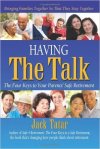
Click on the image to purchase Jack’s book

Recently I had the opportunity to visit with Jack Tatar who has written a book called “Having the Talk.”  “Having the Talk” focuses on ways to begin a family discussion earlier rather than later, about planning for the later life issues of a retired or retiring parent. Jack’s research demonstrated to him people have “the Talk”, but they have it too late, either when there’s little that can be changed, or after expectations have been set by siblings about “who gets what.” When this happens, families are torn apart, and loved ones who played together and protected each other throughout their entire lives now find themselves not talking to each other, usually all the way to their deathbeds.

Here is our recent episode of “Healing Ties” featuring Jack Tatar as we discuss how to have those difficult end-of-life conversation.  

While I understand not everyone is going to be able to have the same experience of having “The Talk” like Richard and I did, let me share a few suggestions on how you might approach this delicate conversation:

  • Always use open-ended question
  • Don’t force the conversation, if there is strong resistance, back off and revisit it at another time
  • Express the importance of  the need for you to be comforted, knowing that by following their wishes, makes it easier on you
  • Enlist the help of an objective third-party
  • Use examples of family and friends.
  • Learn about The Five Wishes 

I believe there are two common aspects to caregiving that everyone experiences, there is a beginning and there is an end, and in most cases, we are not prepared for either one of these life changing events!  It is difficult to plan for the unexpected, but having a plan in place does help temper the confusion when an emergency happens.

Have the talk…you will be glad that you did!


wp-1448474801512.jpeg wpid-wp-1448113432219.jpeg

Christopher MacLellan, MA is a Certified Senior Advisor, Certified Caregiving Consultant, the author of “What’s The Deal with Caregiving?” and the host of “Healing Ties™” podcast.

All rights reserved ©WholeCareNetwork, Inc.

1 Comment

Filed under Caregiving, The Purple Jacket

Webinar: Working and Caregiving Survey Results


e6d06522-963a-4fad-8fa6-11992d1bee66I was most thankful to participate in Caregiving.com  annual Working Family Caregiver Survey earlier this year.  Your participation helped me earn my masters degree in Leadership and Communication from Gonzaga University in Spokane Washington.  On Thursday, June 9th, join me with Denise Brown from Caregiving.com for our webinar on Working Family Caregivers as we discuss the results of the 2016 survey.   Follow the link below to register for a reminder for Thursday’s webinar via Caregiving.com: See Denise Brown’s post below.   See you on Thursday!

Topic: Second Annual Working and Caregiving Survey Results

Day and Time: Thursday, June 9, at Noon ET (11 a.m. CT, 10 a.m. MT, 9 a.m. PT)

A 2012 report released by AARP found that 42% of U.S. workers provided unpaid eldercare for a family member or friend over the last five years. And, 49% expect to do so in the coming five years. Caring for a family member is a workplace problem.

To better understand their experiences, we asked working family caregivers to share in our Second Annual Working Family Caregiver Survey. We partnered with Chris MacLellan (@thebowtieguy), who used our survey results for his thesis. Chris is the author of “What’s the Deal with Caregiving?” and the host of “Healing Ties,” a weekly radio show. You can learn more about his work on his website, www.thebowtieguy.com.

Join us for this 45-minute webinar during which Chris and Denise M. Brown, founder of CareGiving.com, share the results of the Second Annual Working and Caregiving Survey.

Register to receive a reminder for our webinar below.


Register to receive a reminder for our webinar below by following this link: http://www.caregiving.com/caregiving-webinars/webinar-working-and-caregiving-survey-results/

2 Comments

Filed under Caregiving, The Purple Jacket

We Might Have Cancer, But Cancer Never Had Us


I learned through social media that Sunday June 5th is National Cancer Survivors Day which reminded me of the motto Richard  and I lived by after he was diagnosed  with esophageal cancer in 2011 -“We Might Have Cancer, But Cancer Never Had Us.”  Even in some of our most difficult days, we always stuck by our motto because it freed us from the burden of cancer. Sure, we were aware of the reality of the diagnosis, but the fact of the matter is, Richard outlived his original prognosis by more than two years.   I’m confident that  our motto kept us strong throughout the ordeal of dealing with his cancer diagnosis.

I started The Purple Jacket blog not to long after Richard  was diagnosed with cancer.  I remember the day the diagnoses came in quite well, “Mr. Schiffer has a massive growth where the esophagus and stomach attach” said the gastroenterologist.  After beating prostrate cancer, two cardiac by-pass surgeries, Richard looked at me and said, “I guess this will be something that will eventually take me.”  Richard was a realist, that was one of the many qualities I admired about him.

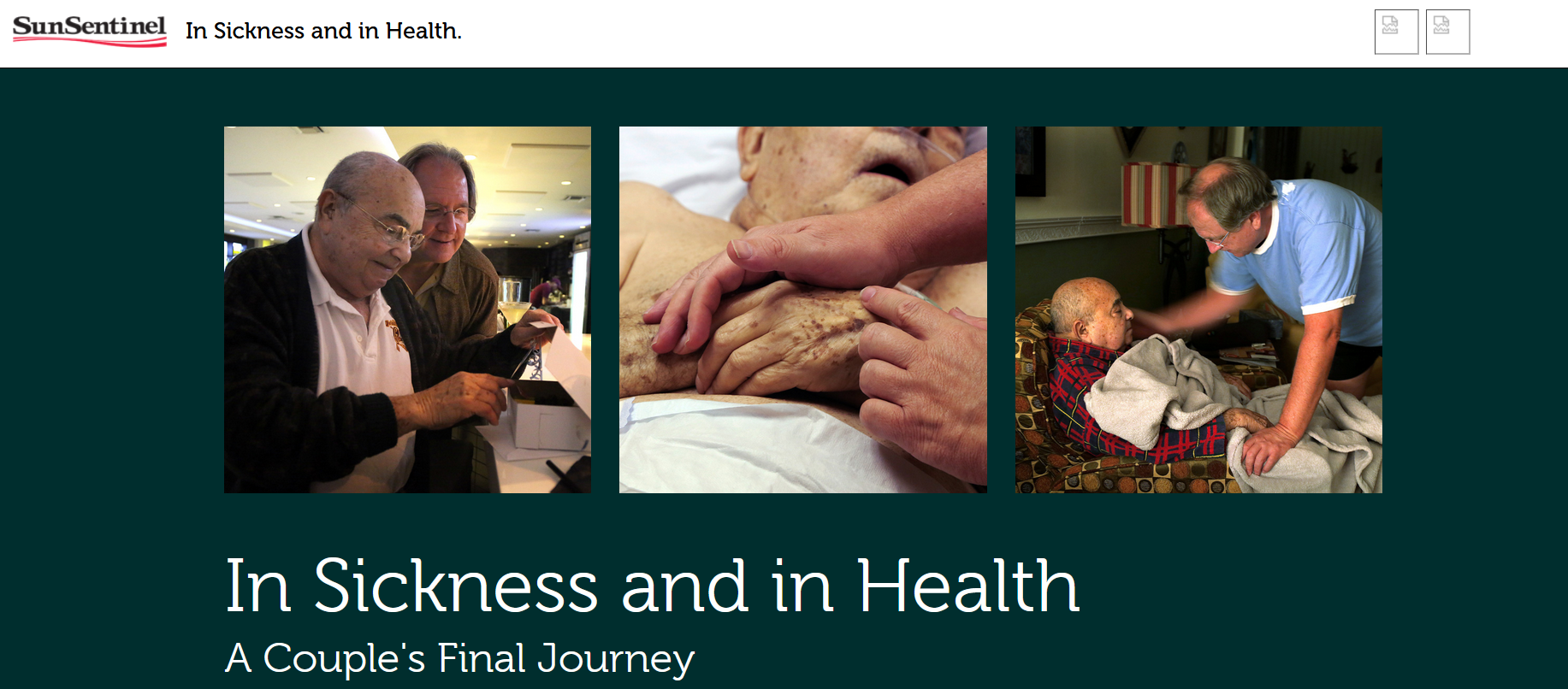
As I think about National Cancer Survivors day, I am reminded about the importance of caregivers sharing our stories with each other.  Writing the blog helped me and Richard cope with the diagnosis.  Our story in the Sun-Sentinel, In Sickness and In Health:  A Couples Final Journey  had a major impact on the importance of  sharing ones story.  I encourage everyone, as they feel comfortable, to share as much of their caregiving story as they possibility can. Sharing ones caregiving story, albeit it cancer, Alzheimer’s, or whatever health calamity you and your caree face, is a good antidote for any insidious  diagnosis, like cancer.

As we age and face different life challenges, we can look back on pictures to help tell the story of what we don’t see right before our eyes.   (2003 thru 2014 – click on the picture to see the year it was taken)

Pictures do tell a thousand stories.  What I did not see in January of 2014, was because I was looking at 2003.  The reality of a cancer diagnosis has a profound affect on everyone.  Sharing ones story has a profound affect too.  It reminds us that we are not alone in our caregiving journey.

I encourage you to share your caregiving story as you feel comfortable because cancer can never take away our love.  You see…”We Might Have Cancer, But Cancer Never Had Us”

Chris MacLellan is the author of “What’s The Deal With Caregiving?” and the host of Healing Ties radio program.

Leave a comment

Filed under Caregiving, The Purple Jacket

Graduate: A Thesis Complete


An investment in knowledge pays the best interest. Benjamin Franklin

The road to Spokane has come to a happy ending with the completion and acceptance of my thesis entitled… Spiral of Silence:  Caregiving, Stress and its Impact in the Workplace.   

Originally proposed by German political scientist Elisabeth Noelle-Neumann in 1974, Spiral of Silence is the term meant to refer to the tendency of people to remain silent when they feel that their views are in opposition to the majority view on a subject.  My theory suggested that working family caregivers, fearful of losing their job, do not self-identify at work because they feel that they are in the minority.  I am happy to report that 75% of the respondents who indicated that they did self-identify at work found some form of relief.  However, 25% of the respondents who did not self-identify at work as a family caregiver, were fearful of losing their job or that self-identifying would be of no help to them.  I am very grateful to Denise Brown from Caregiving.com for allowing me to take part in Caregiving.com yearly working family caregiving survey.  Please feel free to reach out to Denise Brown at denise@caregiving.com if you have any further questions about the working family caregiving survey and how you might get a copy.

Of course there is much more to the thesis; we have more work to do to bring awareness to the epidemic of stress that working family caregivers face on a daily basis.

It is difficult to find the words to describe the feeling of earning a Master’s Degree GU_logoin Leadership and Communication from Gonzaga University. I love the Jesuit tradition and the spirit of Gonzaga. Professor Michael Hazel has been terrific throughout the entire process, as have all of the staff at the University. I will always remember Dr. Hazel’s sage advice at the beginning of the thesis in January, when my goals were bigger than the time frame, “The best thesis is a completed thesis.”  Michael Hazel knows his “stuff!” It is a good feeling to have the thesis completed, an even better feeling to now be an alumnus of Gonzaga.  It is nice to know there are life-long friends in Spokane, WA.

11410888-smooth-road-ahead-good-times-recovery-yellow-street-sign-1is84y6I am getting ready to embark on a new road, (one that is not virtual as was my road to Spokane); I look ahead with anticipation and excitement because I am creating a life to love after caregiving ends through writing, radio, travel and advocacy.

Leave your limiting self-doubts behind and go and grab the life you have always dreamed.

That is my new road to follow!

Chris MacLellan is the author of “What’s The Deal with Caregiving” and the executive producer and host of “Healing Ties” radio show  and a alumni of Gonzaga University!


4 Comments

Filed under Caregiving, The Purple Jacket

Home Safety Tips for Seniors


We welcome back one of our favorite guest bloggers, Maria Alice, to The Purple Jacket!

We all value our independence and autonomy, both of which are threatened as a person gets older. It’s always better for an elderly person to continue to live in their own home, in familiar surroundings, where they are comfortable. For the majority of the elderly, this arrangement is possible with the right support. In today’s world, safety and home monitoring are easier than ever before.

Home Security

One of the best ways to keep your elderly loved one safe is to have a home security system installed. You can find more information and great resources about different kinds of systems here. The benefit is two-fold: this gives your elderly family member a way to signal if there is a medical emergency, and it also provides protection from outside threats. It’s not pleasant to consider that elderly people living alone might be targets of crime, but unfortunately criminals prey on those least able to defend themselves.

Safety in the Bathroom

The bathroom can be a hazard for older people, whose vision and balance will most likely not be as good as it once was. Slipping in the tub and falling is a common source of injury in the elderly and can have tragic results, especially for those who live alone. According to the Centers for Disease Control and Prevention, one out of every five falls among the elderly leads to broken bones or a head injury. Steps can be taken to minimize risk, such as installing a step-in shower or adding a slip-proof surface to the bottom of the tub. Handrails can also be a major help to senior citizens and should be installed next to the toilet and in the shower.

Lighting and Clutter

Memory and mental function are often impaired in older people, especially those in the early stages of dementia. Sufficient lighting can make a big difference in preventing accidents, as can keeping the home clear of obstacles. The old saying, “a place for everything and everything in its place” was never more appropriate than when describing the kind of environment an elderly person needs. As memory fades, it’s more important than ever for everyday necessities to be within reach and in a familiar place.

Home Hazards

Anything that poses a threat to the safety of your loved one should be put away or safety-proofed. Sharp knives may need to be removed from the kitchen. Hazardous corners should be covered with plastic bumpers. Make sure that there is a clear path to follow from one room to another throughout the house, since the risk of falling increases with age.

Carbon Monoxide and Fire Alarms

Besides a security system, carbon monoxide and fire alarms are two other ways that modern technology can help keep your elderly parent or loved one safe. Because memory in seniors can decrease, there is always the possibility they may turn on an appliance and then forget about it. It is also difficult to determine that there is carbon monoxide in your home without an alarm so it is important to have one installed and checked regularly.

Road Map to Independence

Taking these steps will increase the likelihood of an elderly individual living a safe and happy life in their own home. A security system will provide health and safety monitoring, and modifications to the bathroom can have a great impact on an elderly person’s mobility and independence.

Securing the environment from hazards by providing plenty of lighting and eliminating clutter are first steps toward creating a safe home. And of course, every home should have carbon monoxide and fire alarms to protect the people inside. With these steps, you can provide your elderly loved one with the independence and satisfaction that comes from continuing to live in their own home.

Maria Alice is a freelance writer currently living in Chicago. She has a Bachelor of Arts degree in English from the University of Illinois at Chicago with a minor in Communication. She blogs about environmentally friendly tips, technological advancements, and healthy active lifestyles.

2 Comments

Filed under Caregiving, The Purple Jacket

Two Years Past


Love is composed of a single soul inhabiting two bodies. Aristotle

We are taking a break from the thesis project today to remember a significant day in our life. For as long as I live, I know March 9th is going to come around every year.  Significant in the sense that I will always remember March 9th as being the day that Richard made his life transition.  Together as one, our lives changed forever on that day in 2014.

Sure, the pain of losing him has gotten softer, but that doesn’t mean that I don’t miss him quite a bit.  The love we shared is still strong.   I did not want the day to go unnoticed, nor do I want to belabor the point either.   Finding that gentle balance when you lose the love of your life takes time.  Getting over it, means something different to each one of us.  We don’t really get over it, we adjust to it and move on as best we can. The love we shared is still strong in my heart and always present in my life.

I’m not sure what I will do when March 9th rolls around next year, but what I do know for sure is that my faith tells me that I will see him again, my mind tells me that he is forever pain free and my heart tells me that he is standing right behind me.

Enjoy some of our favorite photo’s from our eleven years together.

  Never miss out on a chance to tell that special person in your life that you love them!

6 Comments

Filed under Caregiving, The Purple Jacket

Working Family Caregiving Survey


Education is the most powerful weapon which you can use to change the world.

 Nelson Mandela

After a few days off, I am back on the road to Spokane.  I just hope I don’t get a virtual speeding ticket along the way!   After a couple of rewrites on chapter 2, I have moved on to to chapter 3 and 4 of my thesis project, “Caregiving, Stress and its Impact on the Work Place.”    I don’t want to bore you with the details of chapters 3 and 4, but this next part of the thesis is about the methodology and how to gather data.  This is where I need your help!

I am teaming up with my good friend, Denise Brown at Caregiving.com on her annual survey on Working Family Caregivers.  The survey is 100% anonymous, probably will take no more than 20 minutes to complete and we will share the results of the survey once the thesis is completed.  Here is a link to the survey Working Family Caregiving Survey

During our caregiving journey, I have met a number of wonderful people along the way,

Denise Brown

Denise Brown, Caregiving.com

none better than Denise Brown from Caregiving.com .  Denise has been advocating for family caregivers for over 20 years is recognized as a national expert on Caregiving.  I am proud to call her a friend.  If you have never visited Caregiving.com, now is the time to do it!  Denise’s soothing style and sage advice helps everyone along their caregiving journey.  Caregiving.com is like having an extended family!

 Please see Denis’s  blog post on February 24th, Take Our Survey: Working A Job and Caring for For A Family Member  and while reading Denise’s post, be sure to look around Caregiving.com for terrific information for all Caregivers!

To take the survey simply click here

To visit Caregiving.com simply click here! 

Chris MacLellan is a MA candidate in leadership and communication at Gonzaga University in Spokane, WA and the author of “What’s The Deal With Caregiving” and the host of “Healing Ties” radio show.


Leave a comment

Filed under Caregiving, The Purple Jacket

Everyday: Live, Love, Laugh!


God gave us the gift of life; it is up to us to give ourselves the gift of living well.  Voltaire

I am taking break from the road to Spokane today to enjoy my 59th birthday. (Don’t tell anyone, but I am going bowling again!) Oh, but don’t worry, writing of chapter 3 is in earnest (please believe me)  and I suspect that my professor and mentor at Gonzaga University will have an update for me to do on  chapter 2 before this weekend is over.

wp-1455801164067.jpg

The MacLellan Six: Jim, JoAnn, Sissy, Chris, Gerri & Mary 

One of the greatest things about being the youngest of six, is that no matter how old I get, I will always be the youngest!  When I was younger, I always thought it was a disadvantage to be the youngest.  But through the years, my philosophy on that has changed.  As I get older, my thoughts on the aging has changed, too.  That is why I love Voltaire’s quote: “God gave us the gift of life; it is up to us to give ourselves the gift of living well.”


My sister Mary has the best philosophy

BigGlasses

“Sister” Mary and her trademark BIG Sunglasses 

of life, she decided, long ago, to stay 29. I think she might be on her 43rd year of being 29, but who’s counting and why does it matter?   She happily tells everyone that she has kids that are older than her.  It’s all about mind over matter, because age is only a number, it is how you feel that makes the difference.  


Aging takes on a different meaning for each one of us. Some of us are old when we are young: Some of us are young when we are old. When Richard’s illness progressed, people were surprised to learn

wp-1455586874231.jpg

photo credit: Lynda Horn

of his age.  His age never showed until the last six months of his life.  Richard lived life to the fullest, he did not let any grass grow underneath his feet. Throughout his entire life, he gave himself the gift of living well.  I always admired him for his philosophy on life.  He took no prisoners.

As caregivers we often forget that our first job is to take good care of ourselves.  This mindset is not selfish, remember “it is up to us to give ourselves the gift of living well.”  In the hustle and bustle of caring for someone else, we tend to lose sight of ourselves. I know it happen to me, and I would be willing to bet that losing yourself in the midst of caregiving happened to you too.    In retrospect, I know that my inability to take better care of myself while in the midst of caregiving, has made life after caregiving more difficult.   Thankfully, I can make the choice to give myself the gift of living well.

wp-1455795314060.jpgBirthday’s come and go, some have more meaning than others.  No matter how long I live, I will always admire my sibling for their graceful aging.  Additionally, I will always remember greeting Richard in the doctors office on my 57th birthday to find him sitting there with balloons tied to his chair, waiting for me to arrive so that he could surprise me with his big birthday splash…. It’s a memory etched in stone.

There is much to live, love and laugh when celebrating another birthday, because its not about the number you obtain on your special day,  it is about giving ourselves the gift to live well every day..

Chris MacLellan is the author of “What’s The Deal with Caregiving?” and the host of “Healing Ties” Radio on Spreaker and UK Health Live

Leave a comment

Filed under Caregiving, The Purple Jacket

What’s On Your Bucket List: Caregiving?


We do not remember days, we remember moments.  Cesare Pavese

One of the great aspects of being on the road to Spokane is the anticipation of where the journey will lead me.  Sure, the end of the journey is graduation, but what about the road leading up to graduation? And more importantly, what will happen after graduation?   So many sites to see along the way,  so many people along the route to visit, so many more things to do on my bucket list.

Richard and I were fortunate that we were able to accomplish quite a number of things on our bucket list prior to his cancer diagnosis. Transatlantic cruises  were always tops on our list, and we had quite a bit of domestic trips, too. Lunch in a small mountain side cafe outside of  Arels, France;  hill top view overlooking the green and blue lake, surrounded by the Atlantic Ocean at Ponta Delgarda Azores; relaxing after a walk in Cadiz, Spain.

One of the most enjoyable parts of our trip was in the planning!  We would sit down together and look at maps and plan the itinerary as best we could.  While we had a plan in place, we always left room to explore so that we can check off items on our bucket list.  It was fun for us to check items off our bucket list.  As I continue to plan my road to Spokane, it has come to my attention that my bucket is a little dusty.

dust-monitoringOh, there are many things I still want to do that were on our bucket list: visit the Grand Canyon, drive to Mount Rushmore, fly to Hawaii, more transatlantic cruises and a train ride through the Canadian Rockies.  Now it is time to dust off the bucket list!

One thing that was not on our bucket list of things to do was Caregiving.  I doubt Caregiving is on your bucket list, too!

It seems kind of strange to think about Caregiving as something that should be  on your bucket list because in essence,  no one really wants to be a caregiver. Caregiving just happens! It could be an untimely diagnosis or an unfortunate accident. Who plans on being a caregiver? While all of our caregiving experiences are different, there is a part of caregiving that I think we all experience, the beginning and the ending, and in most cases, we are not prepared for either of these life-changing events. We live in the moment of our caregiving journey while desperately praying for a miracle, hoping the next day will be better than the day before, then all of a sudden, it’s over.

caregiver_story_cjmbrc2013

As I look back on our caregiving journey, I know now the good days far outweighed the bad ones. We might not think that way when we are in the midst of the caregiving trenches, but I have come to know that this is true. As caregivers, we sometimes get caught in the mindset that we can do this alone, or that we do not need any additional help. Along the way I learned reaching out for help was not a sign of weakness, but a sign of strength. Reaching out for help and being mindful of your own personal health and well-being is job #1 for all caregivers. Yet, easier said than done!

Asterisk_blackSo I think adding a little asterk at the end of your bucket list to include Caregiving is a great thing to do.  The asterk can be a subtle reminder to have all your legal documents in order, or to be mindful of the unexpected, but   most importantly-the asterk will remind you not to procrastinate and accomplish as many items on your bucket list as possible,  because before you know it,  the asterk arrives at the top of your list and your bucket list then starts to gather dust.
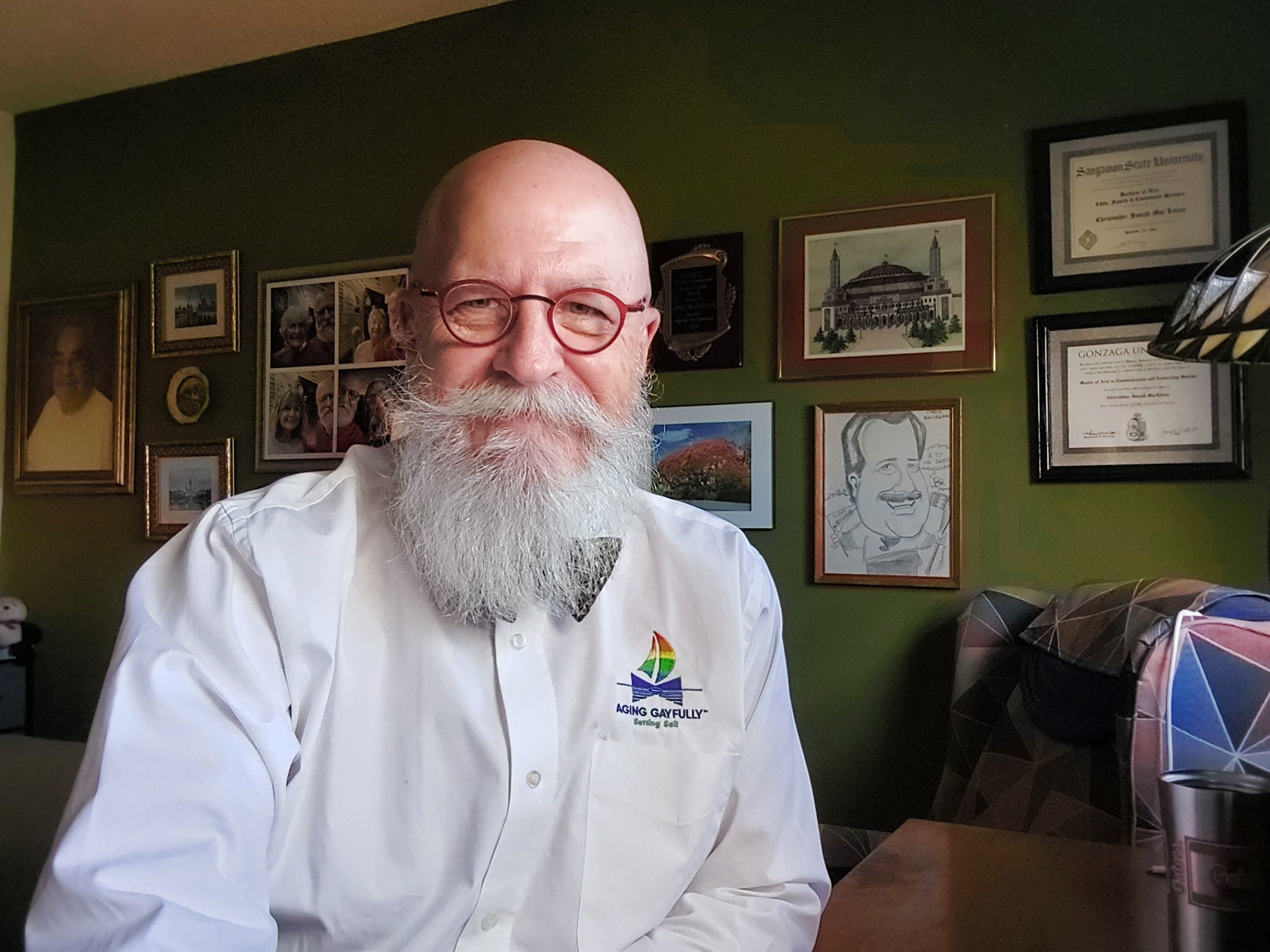
Chris MacLellan is the author of “What’s The Deal With Caregiving?” and the host of “Healing Ties” Radio.  The Road To Spokane is part of a Masters Thesis project leading up to graduation from Gonzaga University in Leadership and Communication.

1 Comment

January 28, 2016 · 6:06 pm